A Torture Center They Will Make Disappear Without Investigation
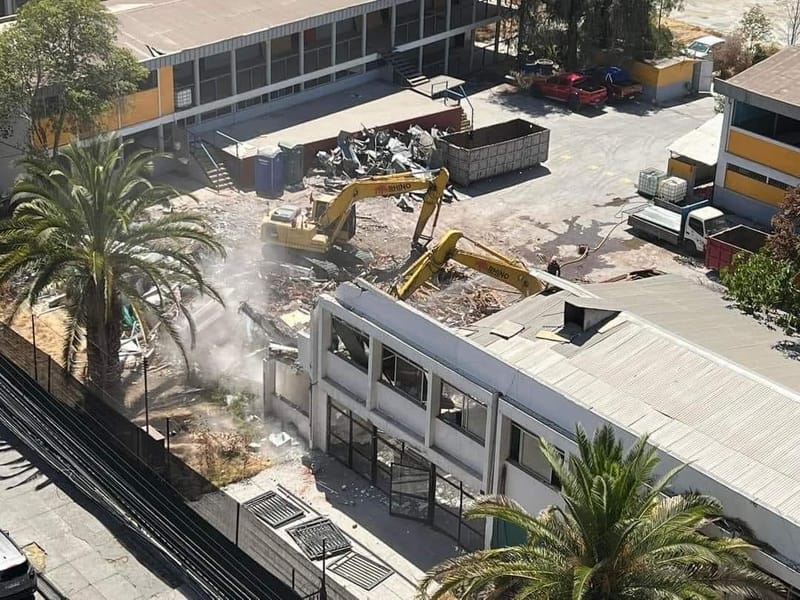
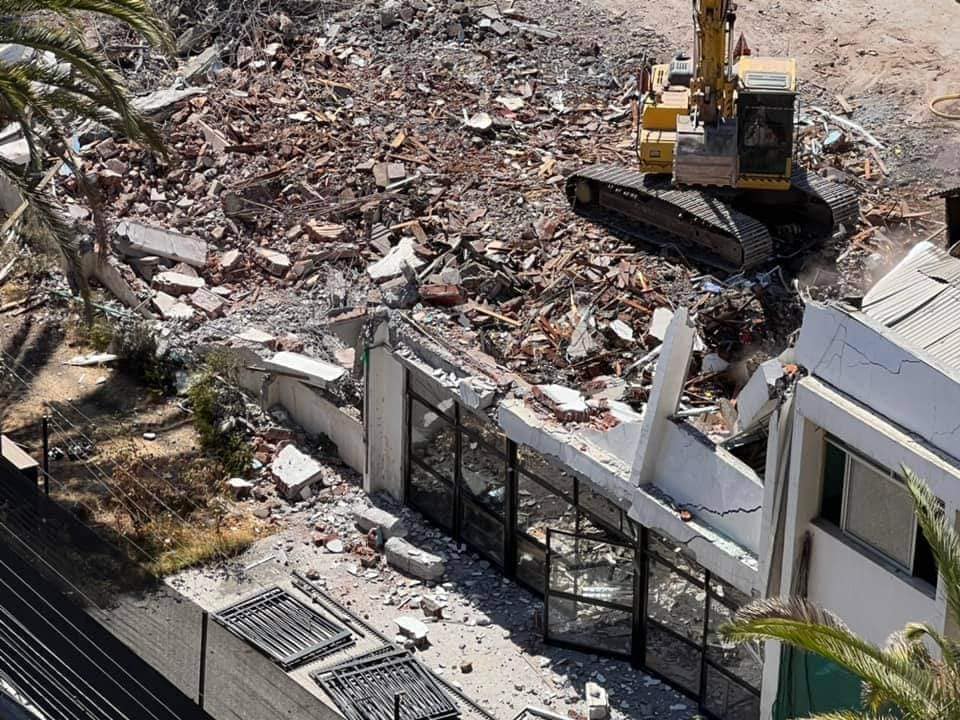
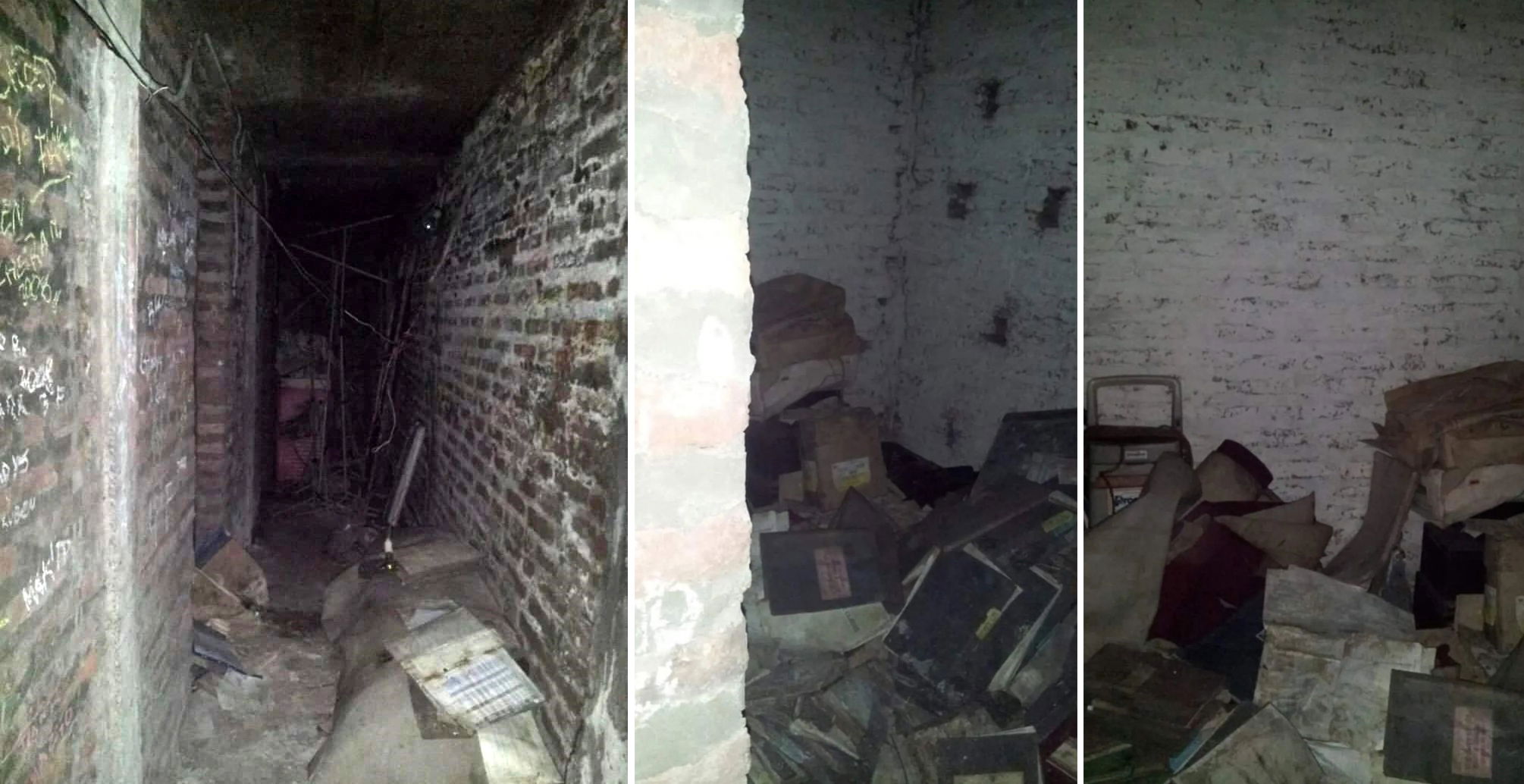
In recent days, social media has been spreading reports that alongside the demolition of the Chilean Eagles College in La Florida, old tunnels with dungeons that may have been used as detention and torture centers during Pinochet's Civic-Military Dictatorship are about to be demolished. As the demolition progresses, time is running out for an investigation into this place, which could be of tremendous value for justice and Chile's memory.
In La Florida, another school is being demolished. Education entrepreneurs have taken advantage of the pandemic for new business opportunities. However, the main concern in this case is not that more and more buildings continue to fill the district — but what will be buried beneath them. While former students and teachers are overcome with nostalgia, a shared memory resurfaces: a widely known secret that had never before left the school community. In recent days, through social media, residents, former students, and even former teachers of the Chilean Eagles College in La Florida have reported the existence of tunnels beneath the school that contain traces and evidence of having been a detention and torture center. With this piece we seek to document the details that dozens of witnesses have shared — details that social media censorship has been making disappear — in hopes that this case will receive official attention and that demolition work will be halted for a proper investigation.
Demolition of the school began in early January.
The Tunnels
The tunnels of Chilean Eagles College have been an open secret since the school's founding in the early 1980s. Many teachers knew about them and kept them hidden from students, which obviously generated speculation, rumors, and legends. However, during the school occupations of 2011 and 2013, students — free to roam the building — were finally able to see what lay beneath their classrooms.
There appear to be more than one tunnel, with at least three separate entrances that were interconnected but were progressively sealed off over time.
Some images recovered in the first days of the investigation.
According to witnesses, the hatch leading into the tunnel is a small wooden door, hidden under a carpet that was in turn beneath a table in the teachers' lounge (or library, depending on the era) — where they stored soccer balls after workshops, for example. There are also mentions of a second hatch in what used to be the kindergarten playground (or changing rooms, depending on the period), leading to a smaller tunnel with 3 compartments that was used to store class registers. The details that follow, however, refer to the main tunnel from the teachers' lounge.
Upon entering, one descended a wooden staircase — old, previously installed. It is not clear from the accounts how deep the initial descent was, but it is estimated to be between 2.5 and 3 meters.
In the first stretch: total darkness except for the light from the hatch, which allows a view of a dust-filled tunnel with a large number of books scattered on the floor. These were not school textbooks, as one might assume — witnesses say they were very old books, written on typewriters, and almost all stained with what could have been blood. The tunnel appears to be built of brick and seems to be a straight passageway; however, as you go deeper the tunnel's shape begins to change, and as it curves slightly, metal "dungeons" or "cages" appear on the left side of the tunnel, with bars that are in many cases broken. Each cage measured approximately 2 by 3 meters — perhaps less; they were not large. No precise count was made, but there appear to have been many — at least dozens, with some accounts even mentioning hundreds, though this may be an exaggeration given the indefinite extent of the catacombs.
Many witnesses recall old clothing and dark stains in the dungeons — perhaps blood or other fluids. In some cells there were metal stretchers; in others, chains hanging from the walls; some had shackles on the floor and handcuffs hanging from chairs. Scratches on the walls are also mentioned, along with carved marks tracking the weeks (seven vertical lines crossed by a horizontal one).
Apparently no one reached the end of the tunnel — either because of the total darkness or the evident discomfort and fear that such an environment would generate in adolescents. However, the air was the main problem. A large number of witnesses mention that the air was "heavy" with "the smell of a dead dog and dampness," accompanied by an emotional anguish that can be well explained by the evident lack of oxygen in the tunnel — since, if ventilation shafts ever existed, they are now completely sealed, and if there is an exit at the other end, it too would be sealed.
The extent of the tunnel is uncertain. Legend has it that the tunnel reaches all the way to the Schöenstatt Sanctuary — which would put its length at somewhere between 100 and 200 meters.
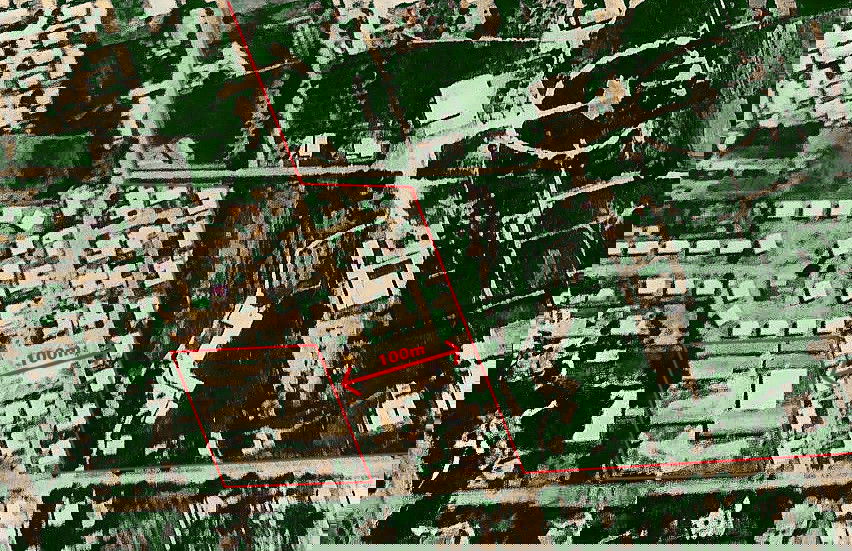
Aerial photogrammetric image from 1978. In the lower left corner, it is visible that before the school's inauguration the buildings that compose it already existed — barely 100 linear meters from the Schöenstatt Bellavista Sanctuary.
The Schöenstatt Sanctuary and neighbors' memory
The young people, in their attempt to gather more information, turned to interviews with residents of the area. Guards at the sanctuary commented that beneath it lay a system of catacombs that could well connect with the school sector — since in the early 1950s, when construction of the sanctuary began, this land belonged to the religious order and the houses that exist today were not yet there.
It should be noted that, in addition to being implicated in serious cases of pedophilia and the cover-up of pedophile priests, the Schöenstatt religious order also has strong ties to the Chilean far right — with its most emblematic members being the Kast family.
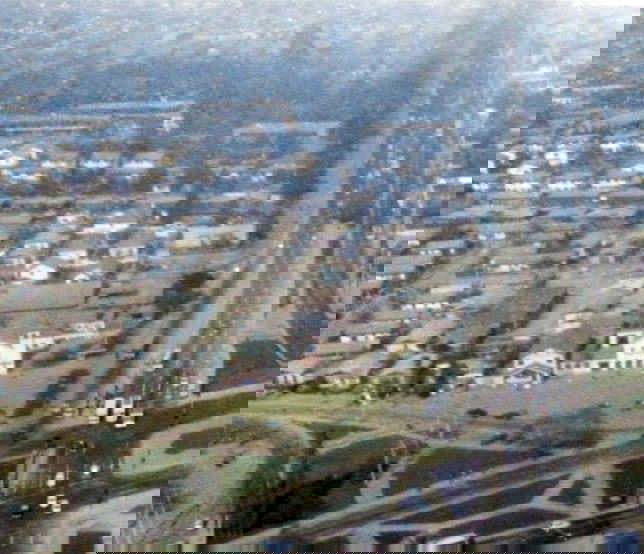
Aerial photograph of the Paradero 14 area of La Florida in the early 1970s. In the upper left corner, the elongated buildings can be seen before they became a school.
The school was inaugurated in 1981; however, the buildings and warehouses already existed in the 1970s. According to the oldest residents, during the early years of Pinochet's Civic-Military Dictatorship, "this place was used as barracks of some sort, because every now and then trucks full of soldiers would arrive."
Students mention that by 2012, when they were researching the matter, there were even websites that listed Detention and Torture Centers, and Vicente Valdés #80 appeared on those lists — but unfortunately those websites no longer exist or would be very difficult to find.
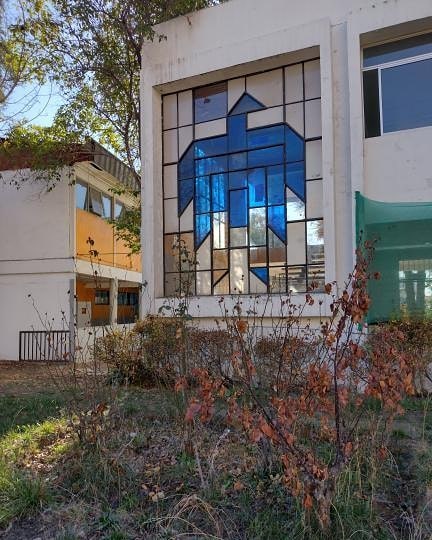
Window of the abandoned school in 2020. The heraldic eagle has been the symbol of this chain of schools.
And why is there a school built over these dungeons?
One of the entrances to the catacombs was discovered within the Chilean Eagles College. This school was owned by Filomena Narvaez Elgueta, a well-known education entrepreneur who built an empire of dozens of schools, enriching herself through profit from education — even owning the Universidad Iberoamericana, which was shut down due to misappropriation of funds, tax evasion, and mismanagement of public resources. Filomena Narváez also owned fundos in Renca, from which she evicted hundreds of residents of a land occupation using militarized police; she was also the owner of the land where the emblematic Toma de Peñalolén and the Campamento Esperanza Andina were located. In La Florida, she also owns the northern tip of Cerro Isla La Loma, from which she also evicted the community project to build a park, led by Germina La Florida — a space now sealed off with metal sheets and barbed wire.
All of these lands and profitable education companies have a close relationship with the Civic-Military Dictatorship — as many other business people do — by virtue of her being an intimate friend of Dictator Augusto Pinochet, something reflected in the anti-unionism and authoritarianism with which she managed her educational institutions.
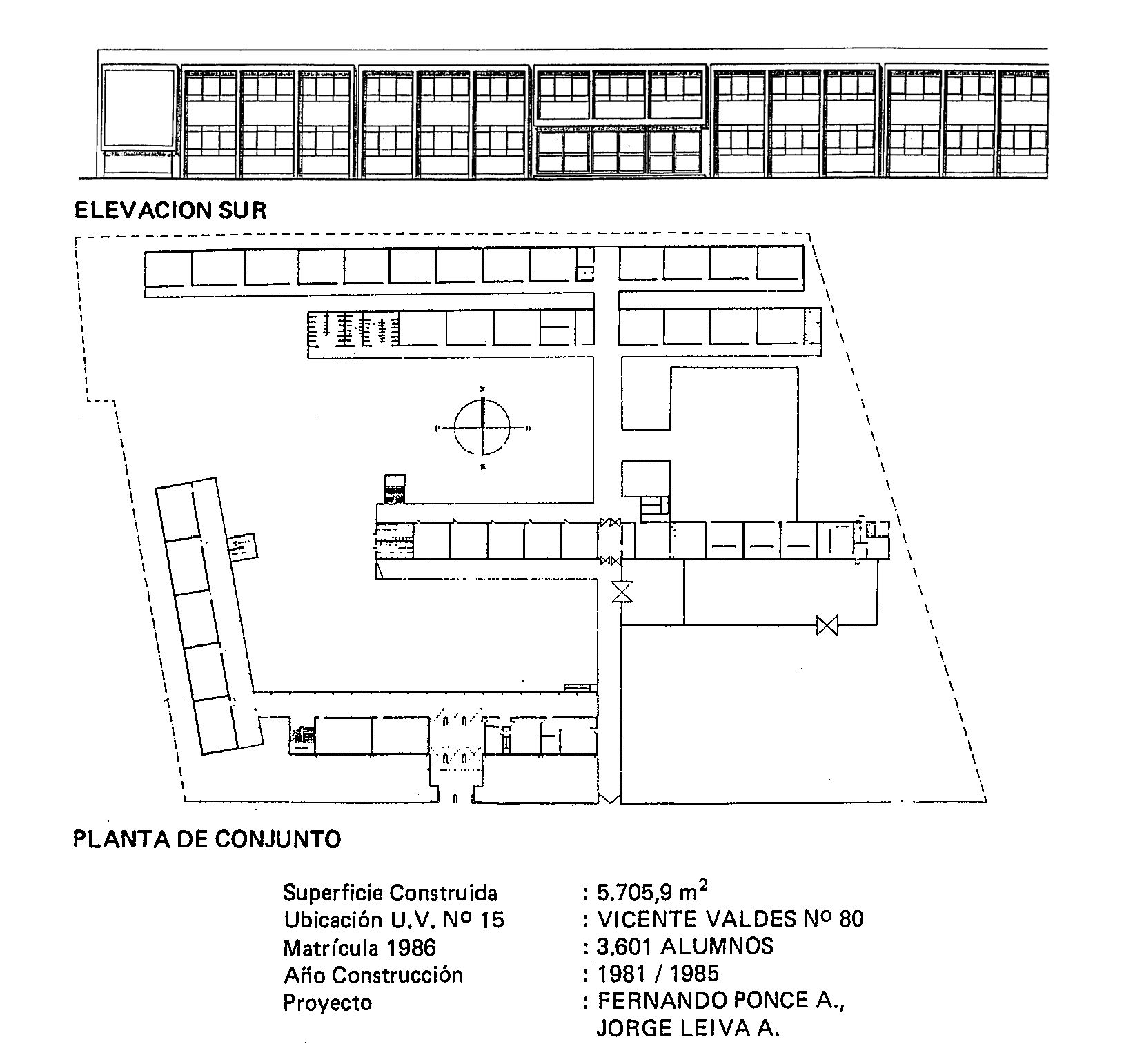
Floor plan of the Chilean Eagles College in 1986. The same buildings and warehouses that already existed in the 1970s can be seen.
The conclusion
Given everything presented by witnesses, there is evident reason to presume that this is a Detention and Torture Center used during the early years of Pinochet's Civic-Military Dictatorship in the 1970s. It is possible that the tunnels were built much earlier by the Schöenstatt religious order when the sanctuary was constructed, and were later used for these other purposes.
The memories of residents and former students, the political connections of the organizations involved, and even the social media censorship of these reports all suggest that there is something that had remained hidden for nearly 50 years — and that those involved want it to stay that way.
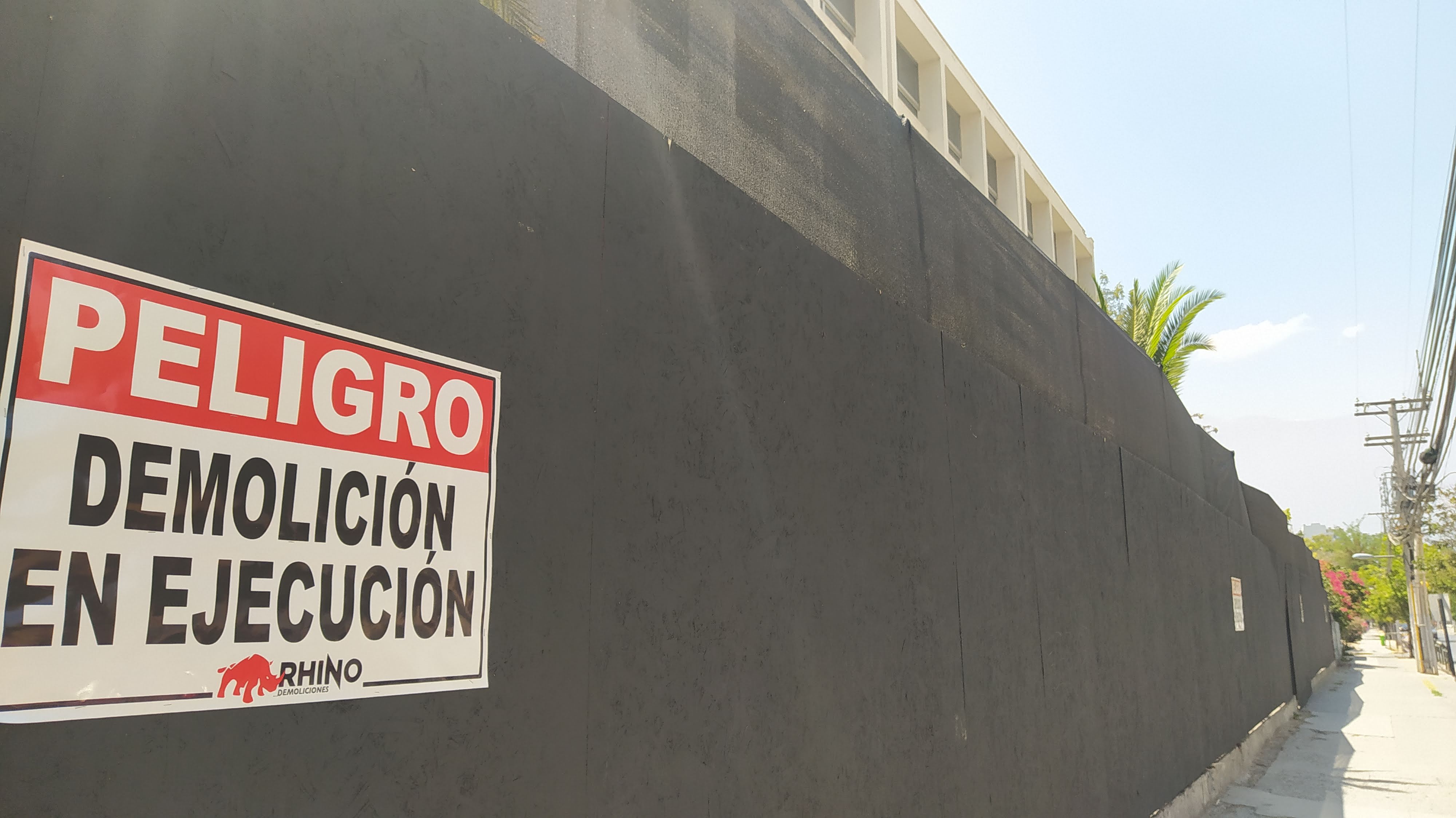
Current demolition barriers around the school.
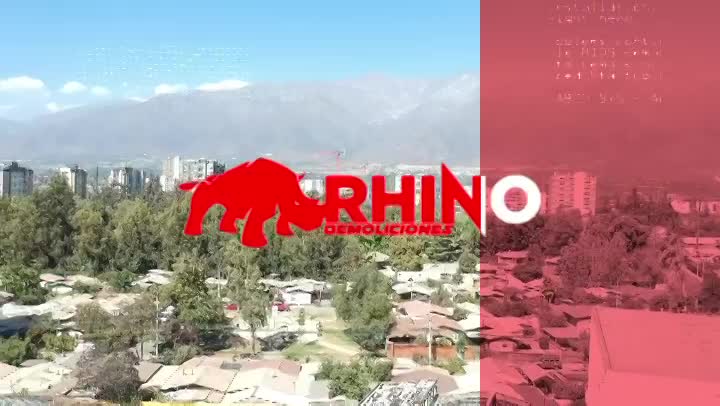
At this moment, the company Rhino Demoliciones is carrying out the demolition of the school's buildings so that Inmobiliaria Pilares can subsequently begin construction of a residential building on the site. With this construction, yet another Dictatorship Detention and Torture Center would be buried under concrete — without investigation, completely forgotten beneath a building — just as already happened in La Florida with the Rojas Magallanes palace. This is deeply serious for the thousands of families who are still waiting for justice and reparation.
Unfortunately, everything presented above will remain mere speculation until it is properly investigated. We hope with this piece to draw the attention not only of human rights organizations, but also of the relevant authorities — so that demolition work is halted as soon as possible and a serious investigation is conducted before fascism once again erases evidence of the past.
Video from the demolition company.
The content expressed in this article is the responsibility of its original authors and does not necessarily represent the views associated with the Panul Para Todos project.
The information archived in Archivo Panul was collected using automated tools, so there may be inconsistencies between what is presented here and the original link. You can visit the original link at the top of this article.