Viña Tarapacá
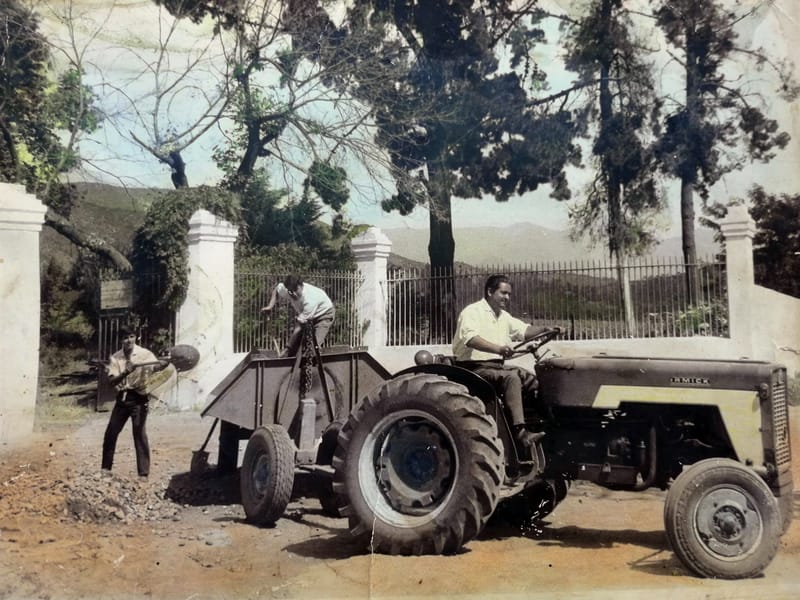
The history of La Florida is a history of rurality. The district was built on the sweat of the peasantry — not under the institutional framework of the landed estate.
We bring you the memory of La Florida's rural heritage in what was Viña Tarapacá — the last great vineyard in La Florida, overtaken by real estate companies and the high-value homes we know today as "Jardines de la Viña" in the upper section of Rojas Magallanes.
HISTORY Unfortunately, little is known about the history of the fundos beyond the names of their owners, who — as always — were landowners and politicians who amassed profits through the exploitation of workers and peasants, and through the unpaid labor of women.
Following the subdivision of the large Lo Cañas estate in 1840, José Luis Cañas Vicuña (owner of the southern portion) sold the fundo in 1866 to Manuel Antonio Briseño, who sold it the following year in 1867. It then became "Fundo La Florida" under the ownership of Francisco de Rojas y Salamanca, who in 1874 founded the "Viña de Rojas" in La Florida Alta. After the death of Francisco de Rojas, his son Victorino Rojas Magallanes acquired Fundo La Florida, and sold the upper portion to Antonio Zavala — it became known as "Viña Zavala" in 1892. However, following his separation from his wife Mercedes Ulloa, ownership of the vineyard passed to her, as she had been advised by lawyer Arturo Alessandri Palma — who would later become President of Chile under a regime that perpetrated several massacres against the people. This lawyer was known as "El León de Tarapacá," and in his honor, doña Mercedes renamed the estate "Viña Tarapacá Ex-Zavala." The vineyard then continued to expand and establish itself in other territories, until it finally yielded the La Florida Alta land to real estate companies in the year 2000. However, throughout the 20th century a large number of the fundo's workers and workers organized themselves into a community that remains in contact to this day — they had football clubs, rural schools, and in 1970 it was the workers of Viña Tarapacá who carried out the Toma at Las Lomas... but those are other Stories of La Florida.
The content expressed in this article is the responsibility of its original authors and does not necessarily represent the views associated with the Panul Para Todos project.
The information archived in Archivo Panul was collected using automated tools, so there may be inconsistencies between what is presented here and the original link. You can visit the original link at the top of this article.