Government prepares to remove protected status from Lauca National Park
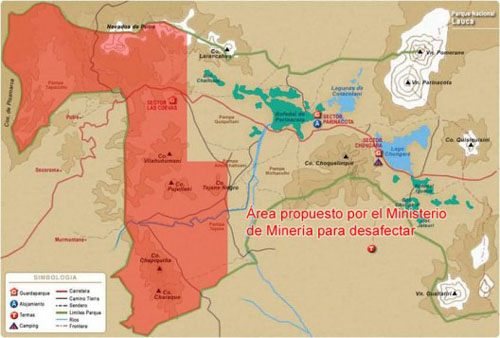
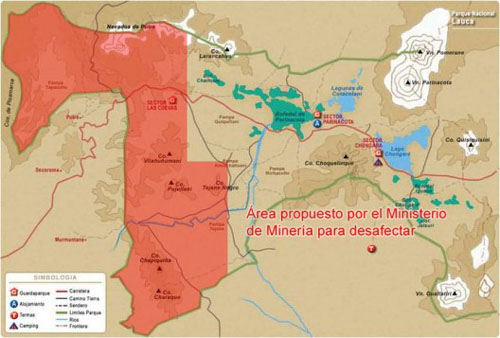
 Eight months ago, President Sebastián Piñera announced that the option of removing protected status from between 5% and 15% of the surface area of Lauca National Park — located in the Arica and Parinacota Region — would be analyzed in order to develop mining activity, which would generate investments of close to US$2 billion.
According to information from sources familiar with the matter, the government is at the stage of drawing conclusions from a report on the subject to assess the benefits this would entail. The decision, for now, would rest with the Office of the Secretary General of the Presidency.
The only thing holding back the Executive's decision would be the opposition expected from environmental groups, given the high presence of biodiversity in the area in question and of Aymara communities. Indeed, the Aymara Coordinator for the Defense of Natural Resources of Arica Parinacota expressed its rejection of the option of developing mining activity.
The Ministry of Mining has been working to find a legal mechanism that would allow mining in the area, given that it is believed to hold significant reserves of copper, gold, and silver across its 138,000 hectares.
Interested companies
Interest from companies in beginning operations in the area is high, and this also has the backing of part of the citizenry — considering that the region, compared to other northern regions of the country, lags economically precisely due to the absence of mining activity. Large companies such as Río Tinto, BHP, Codelco, and Anglo American already hold mining claims in the sector. Three projects also have environmental qualification resolutions (RCA) for exploration: Catanave, by Southern Copper Corporation; Pampa Camarones, by Haldeman Mining Company; and Los Pumas, by Minera Hemisferio Sur.
Original text from Diario Financiero (www.diariofinanciero.cl)
The content expressed in this article is the responsibility of its original authors and does not necessarily represent the views associated with the Panul Para Todos project.
The information archived in Archivo Panul was collected using automated tools, so there may be inconsistencies between what is presented here and the original link. You can visit the original link at the top of this article.