Santiago continues with poor air quality in third environmental pre-emergency
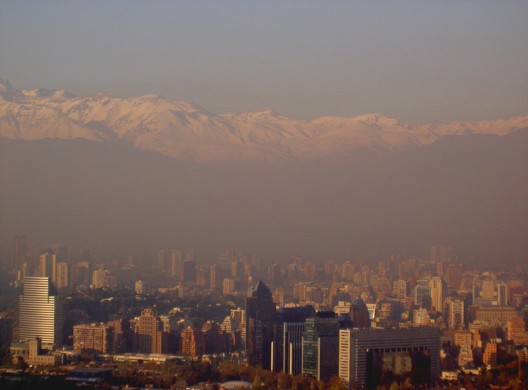
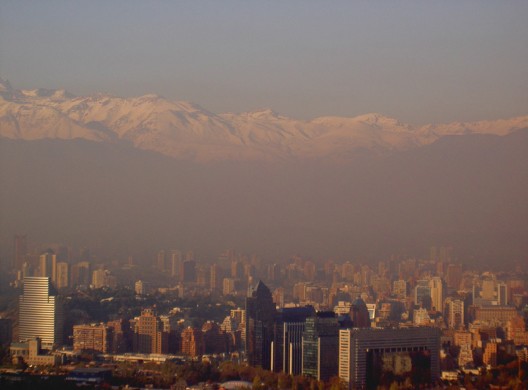
 Santiago continues this Saturday blanketed by a significant layer of pollution, in the third environmental pre-emergency day decreed this year by the capital's authorities — Santiago is considered the second Latin American city with the worst air quality, after Mexico City.
According to information provided by the Ministry of the Environment, on Saturday morning three districts of the capital — Cerro Navia, Quilicura, and Pudahuel, where the airport is located — recorded poor air quality indices.
Meanwhile, Santiago, Cerrillos, and El Bosque present moderate indices, and La Florida, Las Condes, and Independencia show good levels.
The environmental pre-emergency status, decreed by the Santiago Regional Government, prohibits the circulation between 7:00 am and 9:00 pm of vehicles with catalytic converters whose license plates end in the digits 5 and 6.
Non-catalytic vehicles — which practically no longer exist in the metropolitan region — whose plates end in the digits 3-4-5-6-7-8 will also be banned from circulation.
The measure also includes the shutdown of 841 fixed industrial sources and a ban on lighting all types of wood or biomass heaters, whether or not equipped with a double combustion chamber system.
The capital, with 6.2 million inhabitants, is located in a valley surrounded by mountains such as the Andes cordillera, which limit air circulation.
Pollution intensifies in winter due to the absence of wind and a thermal inversion phenomenon (lower temperatures in the lower layers of the atmosphere), which keeps polluting particles at ground level in the capital — a situation made worse this year by the near-total absence of rainfall.
Faced with a lack of effective solutions to reduce the persistent pollution that has affected the capital for more than twenty years, Health Minister Jaime Mañalich proposed this week the permanent application of restrictions on catalytic vehicles.
The measure, however, was rejected by Government spokesperson Ena Von Baer and by Transport Minister Pedro Pablo Errázuriz.
Local media reported that President Sebastián Piñera — who was traveling in Italy this week — will chair a meeting with several cabinet members in the coming days to address this problem, which also causes numerous respiratory illnesses.
By EFE
The content expressed in this article is the responsibility of its original authors and does not necessarily represent the views associated with the Panul Para Todos project.
The information archived in Archivo Panul was collected using automated tools, so there may be inconsistencies between what is presented here and the original link. You can visit the original link at the top of this article.