Why I oppose the mega-dams in Patagonia

by Yerko Castillo Ávalos
I would like to share the arguments for which I oppose the mega-dams in Patagonia:
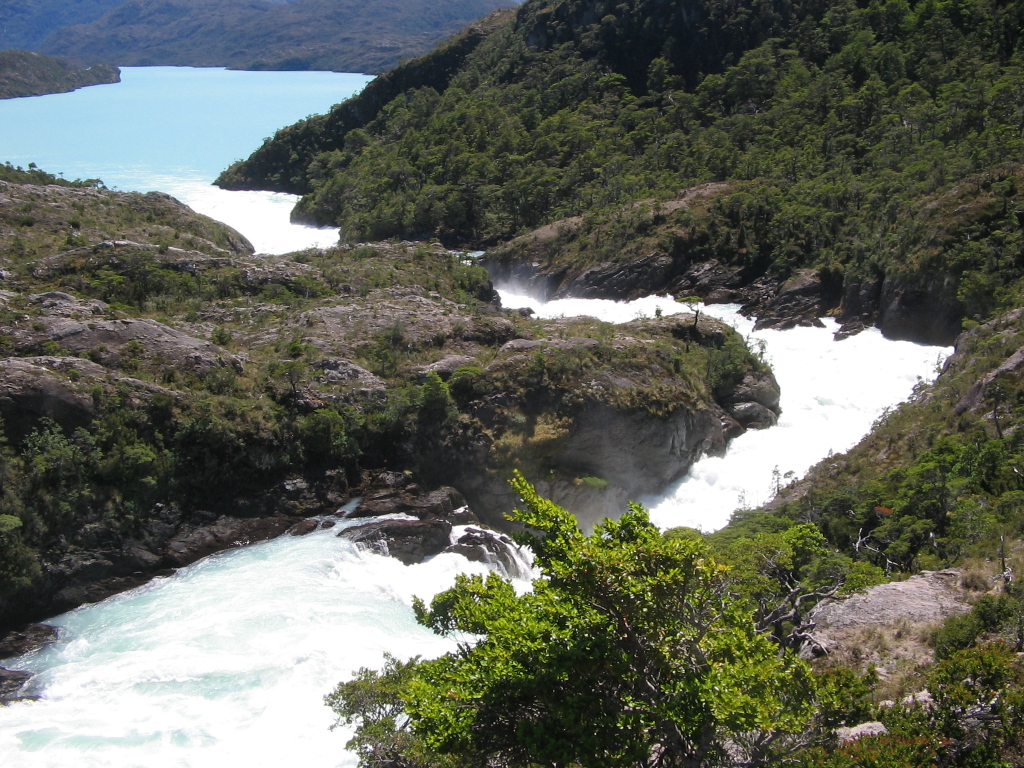
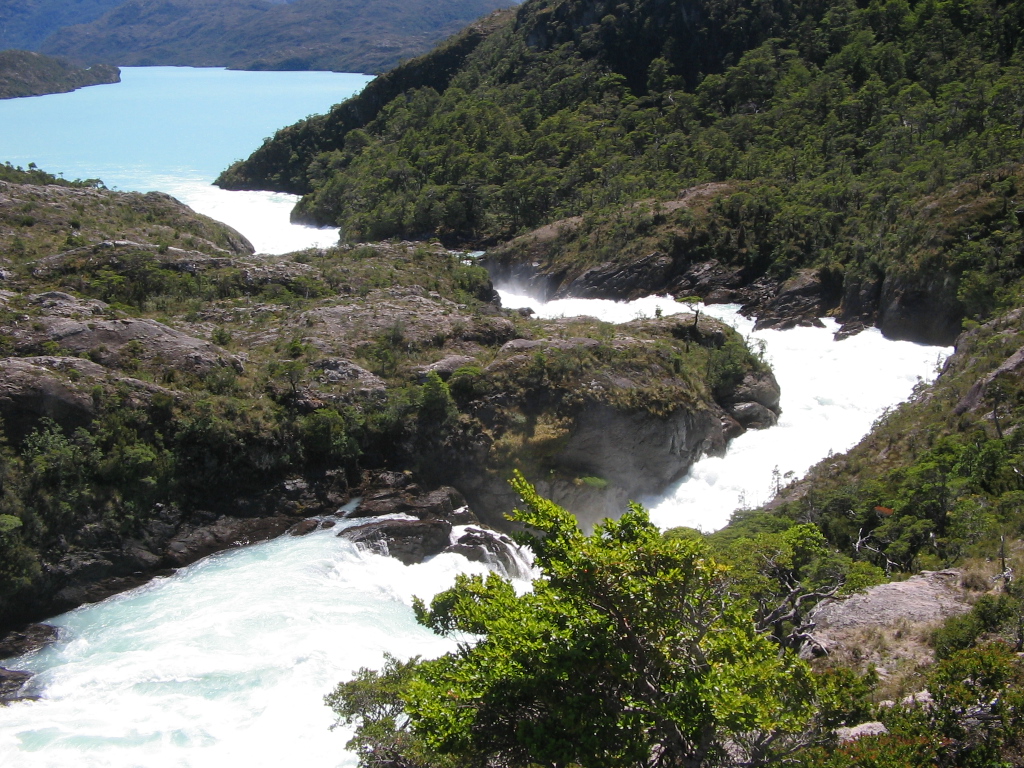
 1. They are not Clean: Saying that mega-dams are clean because they pollute less than a thermoelectric plant is similar to saying that Santiago is clean because it is less polluted than Mexico City. According to a calculation made by Laura Mar, a master's thesis student in Civil and Environmental Engineering at the Massachusetts Institute of Technology (MIT), the HidroAysén project would generate around 3,770,000 tonnes of carbon from the dams and another 8,960,000 tonnes from the transmission line (1). Materials, fuels, machinery, and land use changes are the main contributors to this figure. In addition, the flooding and subsequent decomposition of vegetation generates methane (2), and the reservoir retains nutrients and sediments that serve marine organisms that capture carbon. In other words, mega-dams not only pollute and destroy ecosystems — they would also kill several marine ecosystems that capture carbon (the marine area of influence of rivers is estimated to extend up to 300 km from the river mouth into the sea).
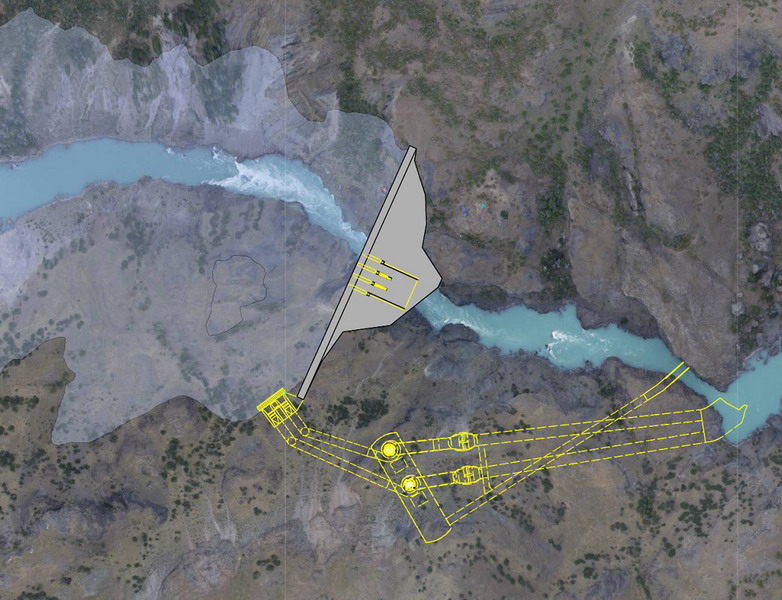
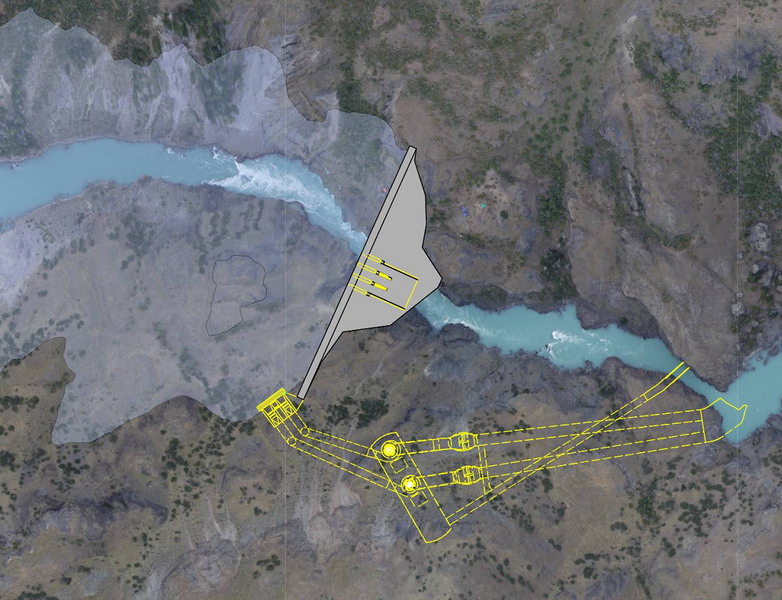
2. They are not Renewable: While water is a renewable resource, mega-dams have a useful lifespan of between 50 and 80 years. What they essentially do is harness a river's flow, build a giant concrete wall, and transform a large flowing river into 2 rivers separated by a reservoir (the downstream river becomes controlled by the dam's operation, so it could be said that it is an artificial river). The reservoir is artificial and has no natural dynamics. The chemical composition of the water changes, it begins to "rot" (eutrophication process) when stagnant, and the biological communities typical of a river ecosystem die. The nutrients and sediments that reach the reservoir become trapped at its bottom and never reach the sea where they feed marine communities — so every year a layer of mud and sediment accumulates at the bottom of the reservoir, which after some years makes the dam inoperable, since removing all this material is almost never cost-effective for the company, and it is better for them to leave the structure as is, since dismantling it is incredibly expensive.
3. They are not Sustainable: One way to define the sustainability of a project is to evaluate whether its impact will generate greater or lesser resilience in the overall system. Resilience can be defined as the capacity of a system to resist disturbances and return to its previous state (for example, the immune system is a resilient system that, when it loses resilience, allows the organism to die unless kept alive artificially). What a mega-dam does is destroy a river ecosystem with a physical barrier in the river's course — transforming a large glacial-fluvial-marine macro-system into two sub-systems: one a glacial-fluvial-reservoir sub-system, and the other an artificially-managed-river-reaching-the-sea sub-system. The original glacial-fluvial-marine macro-system is more complex and has more species and geological history than the new artificial sub-systems. Being more complex, it is more resilient — since it has more means (resources, species, genes, capacities, etc.) to absorb disturbances. For example, in the event of a volcanic eruption or earthquake, the original system will be able to adapt (since it has done so many times throughout its history) and evolve; however, the new sub-systems will collapse (with the risk that the reservoir's rupture will have consequences for downstream communities). They want us to believe they are sustainable simply because the economic benefits they generate would be used by future generations of Chileans — which is also a lie (a lie that would cost us Patagonia).
 4. They are not Chilean: The water that the Patagonia mega-dams intend to use is, under Chilean law, the property of Endesa-Enel — which reportedly partnered with Colbún to be able to present the project as "Chilean." However, the majority partner is Endesa-Enel, an Italian-Spanish consortium. The energy generated by these mega-dams would be destined primarily for Chile's mining projects — projects that are also not Chilean, but belong to corporations and transnationals from the first world that see developing countries as a good way to do business at the cost of plundering our natural resources, which they have already depleted in their own countries. It is a very good business for a few executives from first-world countries. That is why they come and invest: to make money, nothing more.
5. They generate no benefits, but many harms: These types of projects are generally presented as "profitable." However, this is because the economic evaluation includes neither the environmental nor social costs — only the monetary costs of construction (i.e., how much it would cost to build). Some examples of social and environmental costs: How much does the tradition and culture of a region cost? How much does its tangible heritage cost? How much does its intangible heritage cost? How much would you be willing to pay to sleep soundly knowing that the dam upstream will not collapse? How much does having a unique ecosystem on the planet cost? How much does the landscape of almost all of south-central Chile cost? How much do the livelihoods of the regions that would be harmed cost? What are the costs to tourism? How much does it cost to go against the opinion of 61% of Chileans? (the percentage of Chileans who reject the HidroAysén project according to the IPSOS poll of April 2011) How much does tarnishing Chile's country image cost? How much does it cost to preserve Patagonia so that future generations of humans can know and study it? How much does it cost to drive species extinct?
If these costs and estimates were included in the economic evaluation, these projects would clearly not be profitable. What these companies do is internalize the benefits and socialize the losses (meaning they pocket the profits, but all of us — now and in the future — bear the problems).
 6. The Environmental Impact Study review process is flawed: Chilean law recognizes the right to civic participation — meaning any citizen can access the study and submit observations. However, through an administrative trick, the former governor of Aysén, Selim Carrasco, allowed the study to be reviewed without incorporating ANY civic observations or questions — and allowed it to continue through assessment despite the fact that initially several public services expressed their rejection of the study due to fundamental gaps. There have also been falsifications of reports from regional public services by central public services for political purposes. The most well-known case is the falsification carried out by central CONAF of the report made by CONAF Aysén, which rejected the project on the grounds that it would flood National Park land.
7. The Environmental Impact Study is poorly done: The original study (which should have been rejected) included the following gaps, problems, or methodological omissions: Methodological problems and insufficient information on mosses, peat bogs, bryophytes, and the Guaitecas Cypress No studies on glaciers were included No studies on the draining of Lago Cachet (known in the press as "the lake that disappears") were included Serious methodological problems in sediment calculations and physical-chemical water analyses The marine area of influence (up to 300 km from the mouth of each river) was not studied Underestimates of phyto- and zooplankton Undervaluation of amphibian populations Fish reproductive dynamics were not studied Impacts on the upper part of the catchment (upstream of where the dams are to be built) were not studied Bat populations were not studied Serious methodological problems in the sampling and study of otters, huemul deer, foxes, weasels, and skunks No evaluation of ecosystem service losses whatsoever (such as carbon capture or nutrient transport) Insufficient information on geology Insufficient information on land use changes Methodological problems and insufficient information on vegetation characterization in the affected catchments Methodological problems and insufficient information on demographics and archaeology
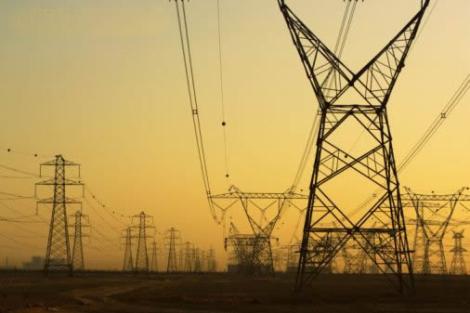
 8. I don't want to live in a country with the longest scar in the world: The electricity transmission line (which is NOT being assessed together with the dams — because thanks to legal loopholes the company can separate the dams from the power line and present them as if they were different projects) would be just over 2,000 km long. It would require a 100-meter-wide cleared strip of land (by law). In other words, it would be a large strip 100 meters wide by 2,000 km long (100 m × 2,000,000 m = 200,000,000 m²) — an area of 200 million square meters of land that would be deforested and/or remain deforested. According to the original route designed based on mining requests (3), constructing it would require relocating human settlements (such as Batuco Bajo and Montecillos in the VII region, or San Martín and Villa Cautín in the IX region), intervening the landscape of half of Chile (the towers stand approximately 70 meters tall), and intervening in national parks and reserves (the transmission line would pass through and fragment 6 national parks, 11 national reserves, 26 priority conservation sites, and 32 private protected areas).
9. They have no right — nor do we — to destroy Patagonia: Like all ecosystems in the world, Patagonia is humanity's heritage, and a private entity cannot decide the fate of heritage, assets, and common resources that do not belong to it. Destroying Patagonia is not only a problem for Chileans — it is a problem for all of humanity. This is why people around the world defend ecosystems everywhere, because THEY BELONG TO EVERYONE.
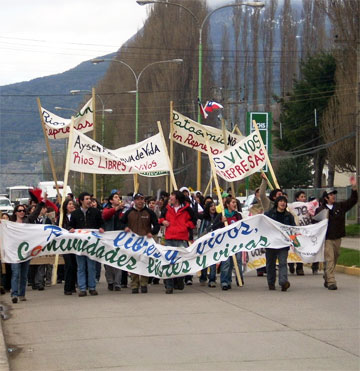
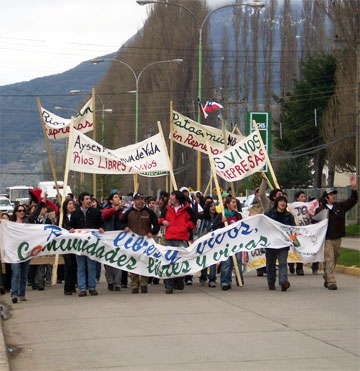
 10. The approval of this project would directly violate the foundations of democracy: Are we not supposed to have the right, in a democratic system, to participate and speak out? Well, this right was not considered in the evaluation of this project — which can be approved WITHOUT considering A SINGLE civic observation. Moreover, a recent poll showed that 61% of Chileans oppose this project (IPSOS poll, April 2011). If democracy is the government of the majority, should not at least a majority of citizens agree before undertaking a project of this scale? Not only do we not agree — we openly reject it. Do our authorities really think we have nothing better to do than keep reminding them that they were elected to do their job on behalf of ALL Chileans? And to top it off, those of us who want to help draw attention to the senseless madness that would be this mega-anti-democratic-disaster are dismissed and labeled "environmental terrorists" by a handful of executives of these companies who sit in their offices in Santiago, Madrid, and Rome — without even bothering to rebut the arguments I have presented here. Isn't this project supposed to be SUCH a great idea? Why then is it so difficult to convince people? Why then are they spending millions on a campaign to frighten citizens? Why not instead provide a coherent response to the public?
To all the gentlemen of HidroAysén: if you intend to make us believe that destroying rivers and plundering several regions of Chile is something good and desirable for everyone, you will need better arguments — because the ones you have offered so far are half-truths, or are straightforwardly LIES carefully crafted with no supporting substance capable of convincing anyone. LIES in the service of economic power that most of us don't believe.
Yerko Castillo Ávalos Master's in Water Resources Center for Environmental Studies Universidad Austral
References: (1) Dams and climate change gas emissions http://www.patagoniasinrepresas.cl/final/represas-y-emisiones-de-gases-de-cambio-climatico.php
(2) Dams and greenhouse gas emissions http://www.patagoniasinrepresas.cl/final/dinamicos/RepresasSuciasRevisada.pdf
(3) HidroAysén. The contentious route http://www.politicaspublicas.net/panel/tr/py/294-linea-hidroaysen.html
The content expressed in this article is the responsibility of its original authors and does not necessarily represent the views associated with the Panul Para Todos project.
The information archived in Archivo Panul was collected using automated tools, so there may be inconsistencies between what is presented here and the original link. You can visit the original link at the top of this article.