OPINION: Urban expansion toward Bosque Panul threatens the wellbeing of the Metropolitan Region's population
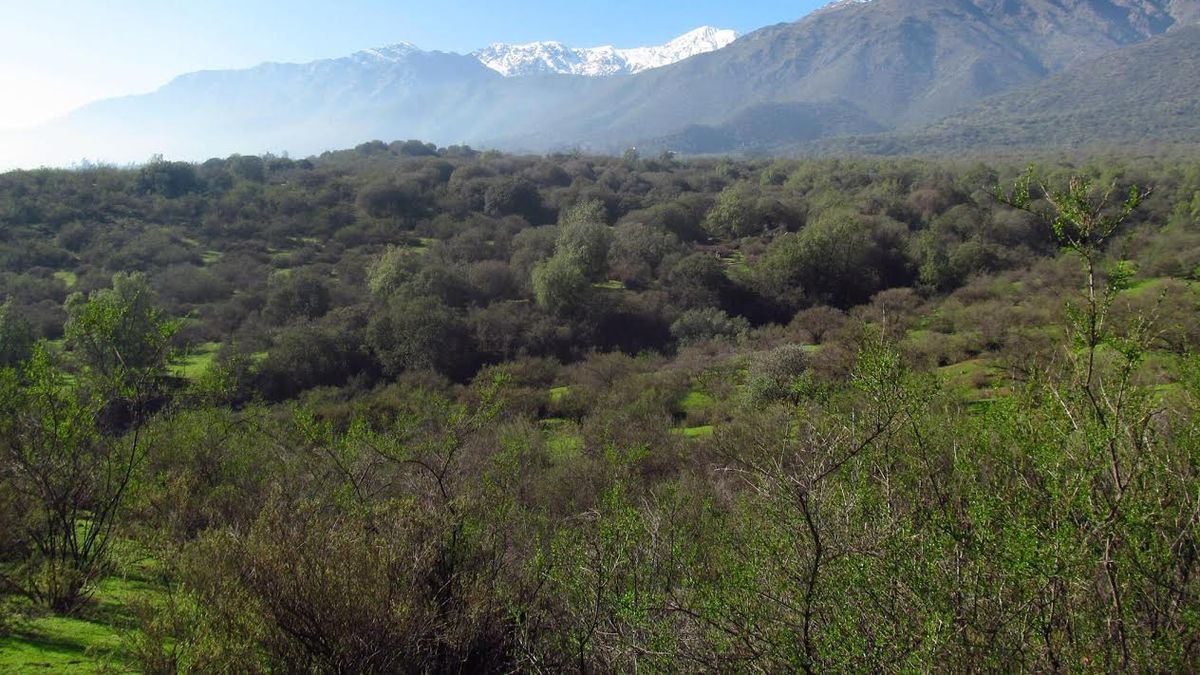

Recently, a media outlet reported on the troubling situation facing one of the last urban forests in the Metropolitan Region. The real estate company Gesterra, owner of the estate bordering Bosque Panul, submitted a subdivision project in January that is currently being processed by the Public Works Department of La Florida Municipality. This subdivision could be carried out without issue since it is consistent with the current La Florida Regulatory Plan. In other words, due to private interests and the permissiveness and obsolescence of land-use planning instruments, the urbanization of Bosque Panul will sooner or later become a reality.
This regrettable situation is repeated across many parts of Chile. As a country we continue following a misguided development logic, with little questioning of the results obtained and no interest in establishing land-use planning that sets limits on urban expansion — expansion that threatens native ecosystems vital to our survival in a climate change scenario. Yet it seems as though climate change and its effects were merely an illusion, as though cities were the center of the territory and ecosystems existed only to adorn the landscape. Given this, I find it necessary to highlight some aspects that should make us reflect on how harmful it would be for a native forest like Panul to be affected by urbanization.
When native forest is cleared to install a housing complex in more natural spaces (complexes that dubiously aim to relocate people living in informal settlements), what is being done is reducing the decontaminating capacity of cities, especially those declared saturated with air pollution. It should be noted that Chile is home to 12 of the 15 most air-polluted cities in Latin America and the Caribbean, Santiago being one of them.
Urban expansion into natural environments also increases the risk of fires due to the proximity of more homes to surrounding vegetation, especially in areas where rainfall has decreased sharply. In precordilleran zones, populations are exposed to the risk of being affected by extreme weather events such as floods, mudslides, and landslides, and there is also the risk of invasive species encroaching on native habitats and native fauna being displaced into urban environments.
One of the most concerning issues highlighted by the health crisis is mental health, and with it, the relevance of natural areas in the city. Since 1982, Japan has promoted Shinrin Yoku (forest bathing) as a therapy of conscious reconnection with nature, for the benefits it produces on people's physical, mental, and emotional health. Various scientific studies have shown that forests release volatile compounds capable of killing and inhibiting the development of pathogenic microbes, and of increasing the number and activity of human immune cells that protect against infectious disease. In 2020, an international study was published evaluating the effects of the COVID-19 pandemic on the use and perceptions of urban green spaces. Results showed that urban residents normally need accessible green space mainly for physical exercise, relaxation, and observing nature. During COVID-19 lockdowns, nature was tremendously important in providing places of comfort and relief, and in enabling exercise and relaxation.
[You may be interested]: El Panul under threat: how real estate firms are closing in on Santiago's only native forest
Taking into account the importance of nature in urban space and its contribution to our wellbeing, is it right for Bosque Panul to undergo a land-use change solely to benefit private interests? Which authorities will be held accountable for the loss of ecosystem services that will affect the entire Metropolitan Region? Should Chile remove Sustainable Development Goals 3, 11, 13, and 15 from its 2030 Agenda for failing to act consistently? Would demanding expropriation be a good solution given the uncertainty surrounding the preservation of ecosystems that are key to the common good? These are questions that should not leave us indifferent or passive in a year full of elections. We must identify who is answering these questions and, of course, acting on them.
Faced with an incipient constitutional process, it is also necessary to begin rejecting the idea that cities are the center of the territory, as they are just one component within it. Faced with the effects of climate change, implementing land-use planning becomes urgent to ensure the functioning of river basins in the face of drought, and this can be supported by protecting native ecosystems.
This discussion is necessary for effective public policies and binding land-use planning tools to be developed, especially at the urban-rural interface, assessing the territory's capacity and the development needs of the people who inhabit it. We must begin to question the effectiveness of current land-use planning instruments, the role that regional governments, mayors, and councilors are playing on this matter, and also demand that the Ministry of Housing and Urban Planning take action, since it cannot continue to distance itself from an issue generating conflicts nationwide. In the new Chile, urban expansion must begin to develop with socio-environmental responsibility — and if what has been outlined here is taken into account, private interest should not take precedence over the common good.
[You may be interested]: Paris, Stockholm, and Barcelona: urban planning that thinks about people
The content expressed in this article is the responsibility of its original authors and does not necessarily represent the views associated with the Panul Para Todos project.
The information archived in Archivo Panul was collected using automated tools, so there may be inconsistencies between what is presented here and the original link. You can visit the original link at the top of this article.