La Florida Mayor: 'We have asked every government — Piñera, Bachelet, Boric, and the new one — to expropriate Bosque Panul'
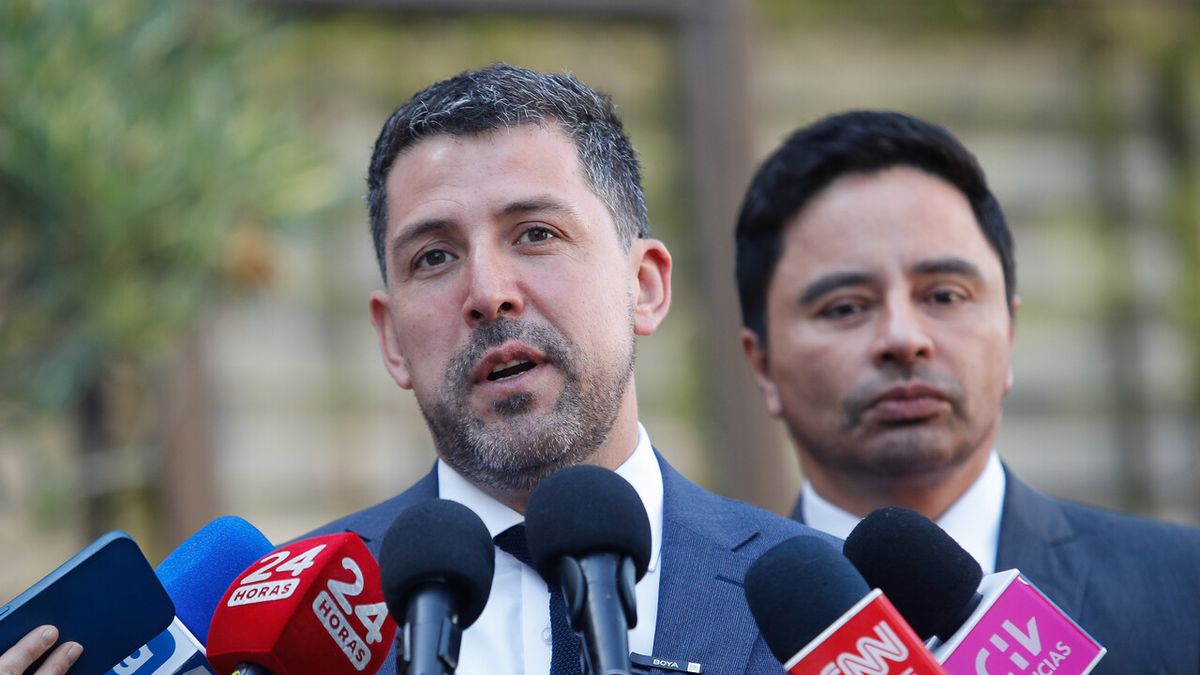
Daniel Reyes (independent) became mayor of La Florida in December 2024 after three terms under now-senator Rodolfo Carter (Republicans), inheriting the implicit challenge of continuity: preserving what had been built while stamping his own mark on the new administration.
In that spirit, Reyes successfully carried out the eviction of the Toma Dignidad — the illegal settlement established in 2020 in a mudslide-risk exclusion zone — through institutional coordination with the presidential delegation of the Government of Chile and the relevant ministries, achieving what he himself describes as an "exemplary" process.
In this interview with El Desconcierto, the mayor addressed public safety in the municipality, argued for expanded powers for municipal inspectors, and broke with his mayoral peers on the transfer of municipal education to the Local Public Education Services (SLEP).
He also expressed support for José Antonio Kast's public-policy proposal to exempt first homes from property taxes, which he views as double taxation, and noted that successive governments have been asked to expropriate the Panul precordilleran park to protect the last sclerophyllous native forest within Santiago's urban limits.
Preventing corruption
— What does the compliance model the municipality is implementing consist of?
It is public knowledge that municipalities, and municipal corporations in particular, have been caught up in corruption-related situations. We have an obligation not only to comply with the law, but to go one step further. We are implementing a compliance model — a crime-prevention model — that operates through risk matrices: we identify the areas most susceptible to these types of situations (initially within the municipal corporation) and put in place concrete mechanisms to anticipate them.
Those mechanisms include anonymized whistleblower channels, with the reporter's identity kept confidential, and the role of a compliance officer: an external agent who not only certifies adherence to transparency and public procurement regulations, but also identifies the highest-risk areas for preventive action.
We are pioneers in this: there is no municipality or municipal corporation in Chile implementing a similar model. Last year we held a seminar with the participation of the Comptroller General of the Republic to advance in this direction.
— Why is mere compliance with the law not enough?
Because we are administrators of public resources, and that demands more than the legal minimum. No institution can claim to be immune to corruption; on the contrary, we must always stay one step ahead. Today we operate within the parameters of the Transparency Law and the Public Procurement Law, which are legal mandates, but are also fundamental instruments for rebuilding citizens' trust in institutions — trust that has been badly damaged.
Public safety: territorial coordination and inspectors' powers
— How do you assess the security situation in the municipality?
Public safety is the number-one concern nationwide, and La Florida is no exception. What we have done is maintain coordinated work between the municipal security directorates, Carabineros, and the PDI (Investigative Police), as well as at the territorial level with neighboring municipalities. Setting aside any legitimate political differences, we have reached agreements with Mayor Toledo in Puente Alto, Mayor Miguel Concha in Peñalolén, and the mayor of Macul, across an extremely broad political spectrum.
Criminals do not respect boundaries — they care nothing about crossing a municipal line. That is the challenge we have addressed together with the mayors of southeastern Santiago, and I believe we have handled it well.
— Is the new Municipal Security Law heading in the right direction?
It is progress: it formally recognizes the status of municipal security officer, grants benefits such as life insurance, and contemplates — pending the regulations — the possibility of carrying non-lethal weapons under certain parameters. However, on some operational matters, the law falls short.
The clearest example is this: when a municipal inspector catches a criminal in the act, they cannot take the person directly to the police station. They must wait for Carabineros to arrive, and that process can take hours. We are arguing that, in that specific circumstance, inspectors should have the authority to carry out the transfer directly. This is not a whim — it is what reality demands. Municipal security officers today are often the first responders to a crime; sometimes we arrive before Carabineros.
— A few months ago, a La Florida inspector was detained by Carabineros. Has an investigation been launched?
That happened more than six months ago. Before the law was passed there were grey areas: inspectors operated under powers that were not always clearly defined, which created tensions, particularly around vehicle checks. Carabineros conducted an internal investigation whose findings are in the hands of the institution itself.
Today that situation is much better contained. The law more clearly delineates both the role and powers of inspectors. We trust that those incidents — which did not only occur in La Florida but in other municipalities as well — will not be repeated. Since then we have maintained an ongoing and collaborative working relationship with the Prefectura Cordillera and the municipal police units, with very good results.
Toma Dignidad: the eviction that took years
— The eviction of Toma Dignidad was recently completed. How did the process unfold?
It was an extensive process that unfolded throughout 2025. I want to highlight the collaborative and coordinated nature of the work between different public bodies: the Metropolitan Region's presidential delegate, Gonzalo Durán, the relevant Seremi, the Undersecretariat of Housing, and the municipality itself. We first carried out a census of the people living there, offered housing solutions — transitional rental subsidies or permanent solutions through Serviu — and ran social operations to gather that information and forward it to the housing agency.
A first phase was carried out in October of last year and a second phase concluded in the final weeks of February. Today we can speak of the former Toma Dignidad. A park has been planned for that land for years, giving continuity to the green-space project carried out along the Ribera Sur.
The settlement also had an additional risk component: it was located in a mudslide-risk exclusion zone. So this was not only about restoring the rule of law, but about protecting the physical safety of those living there.
— A percentage of the evicted residents had no access to housing subsidies. What happened to them?
Based on the census we determined that around 50% of the people could access some form of subsidy — transitional rental or permanent solutions through Serviu. But there was a significant number who did not meet the criteria of the State's housing policies: some fell outside the vulnerability ranges established by the regulations, others already had housing, and a substantial number were in irregular immigration situations. The Chilean State, in those cases, cannot offer a solution.
What seemed right to us was to speak to them with complete frankness. At the time of the eviction, shelters were made available, which were used by a small percentage of the total. Once the deadline agreed with the central government expired, those people fell back on their family support networks. Within 72 hours they had left the shelters.
— What is the housing situation in La Florida in general terms?
It is not very different from the rest of the country. We have more than a hundred housing committees — people who, according to Serviu's criteria, need a housing solution — and we are currently carrying out six housing projects in coordination with the agency.
We try to keep families in La Florida so they do not lose their local support networks. We have no situations similar to the former Toma Dignidad, but we do have some smaller settlements that have been properly registered, whose residents are in the regular process of applying for housing.
Bosque Panul and the precordillera
— Are there any plans to urbanize toward Panul or other areas of La Florida's precordillera?
They are not on the table. Panul today has an absolute ban on residential construction, and it is also private land. What we have asked of every president — including President Gabriel Boric, and we will do so again with the new administration — is the expropriation of Panul, which we believe is the fundamental solution.
Its environmental value is invaluable: it is the home of the sclerophyllous forest, combined with native species typical of the precordillera. Our intention is to preserve it, not to urbanize it. Unfortunately, for budgetary reasons, no administration has been able to make it happen.
— Do you think the environmental debate over the precordillera has advanced or retreated?
There is widespread interest in protecting it, but when you walk through it, you see campfires, remains of parties, rubbish, bicycle and motorbike tracks. That represents a real risk of fire and deterioration of the sclerophyllous forest. The greatest risk to Panul today is not urbanization — it is everyday misuse.
We need a more rational debate than the one that often plays out in a heated way around this topic. We all want to protect that heritage, but we must translate it into concrete actions: greater State presence, regulated access, and, as the definitive solution, expropriation. Since the land is private, the owner could legally close it and no one would be able to access it. That is why expropriation is so urgent and important.
The transfer to SLEP
— How is the transfer of municipal education to the Local Public Education Services progressing?
We committed to this process from day one, because the current legislation requires it, and we will fulfil that obligation. La Florida's transfer already began last year, and schools should be under the new authority from the first of January next year. Any alternative arrangement that might be proposed today has no regulatory basis.
That said, there is also a deeper analysis: the municipal education model has structural problems. We operate with variable income — essentially enrolment and attendance — while costs are fixed: staff and the running of schools do not adjust according to daily attendance. Municipalities cannot solve that problem on their own. In that sense, I believe the SLEP can be a better answer to that structural challenge.
Property taxes
— What is your view on exempting first or second homes from property taxes?
This is an issue where I find myself in a minority among my peers. A large number of mayors oppose the exemption because property taxes feed the Municipal Common Fund — the solidarity-based inter-municipal financing mechanism.
But I have a fundamental objection to the property tax: it taxes wealth, and the resources a person used to buy their home were already taxed. It is double taxation. In practice, I have neighbours who come to me and say: "I bought this property when I was working. Today I have a much smaller pension and I can't afford the property tax payments." That is not right.
For that reason, I am prepared to push for a progressive exemption agenda for first homes, focused especially on older adults. Around 50% of properties in La Florida are subject to property taxes. We need to find mechanisms that compensate municipalities for that reduction in revenue, but the principle seems fair to me. When a property is rented out — a second, third, or fourth home — that income must be taxed. But not the home that serves as a family's primary residence.
The content expressed in this article is the responsibility of its original authors and does not necessarily represent the views associated with the Panul Para Todos project.
The information archived in Archivo Panul was collected using automated tools, so there may be inconsistencies between what is presented here and the original link. You can visit the original link at the top of this article.