El Panul under threat: how real estate firms are closing in on Santiago's only native forest
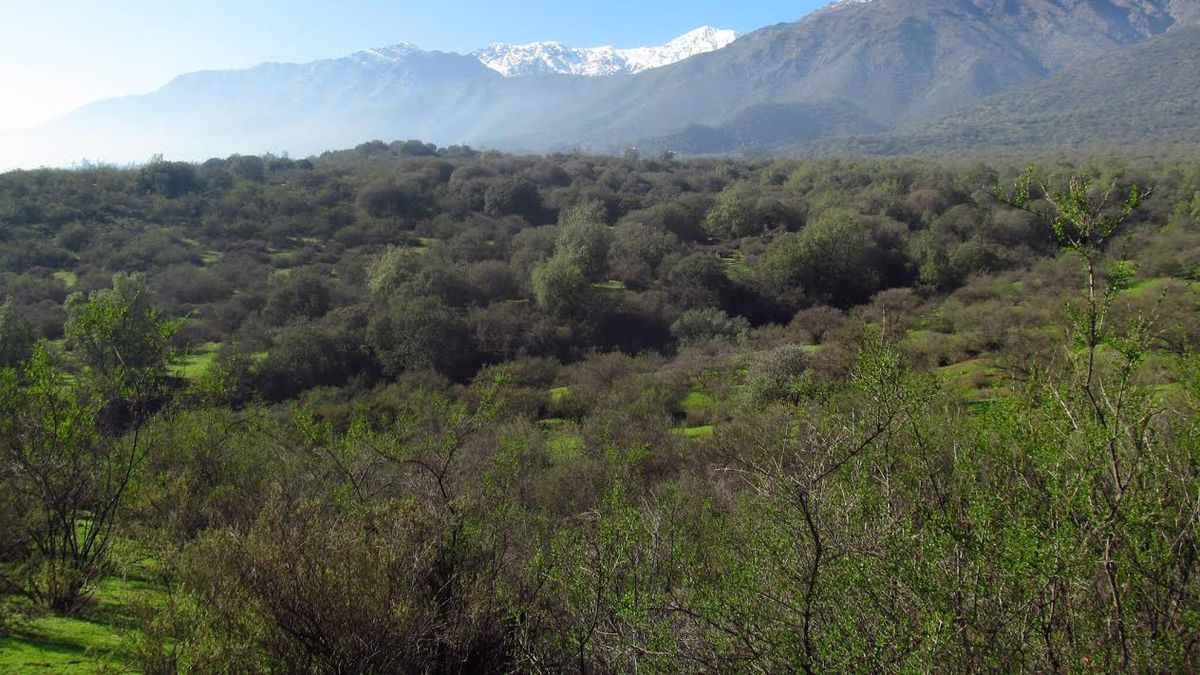

Located at the foot of the Sierra de Ramón in the municipality of La Florida, the native sclerophyllous forest of Panul is the last forest mass of its kind remaining in the city of Santiago. What does sclerophyllous mean? It is a type of forest that grows only in temperate zones with prolonged dry seasons. Its trees have evergreen leaves and very hard root systems, drawing on groundwater to survive year-round. This type of forest exists in only five places in the world.
It shelters diverse species — among its flora are the espino, quillay, litre, peumo, and alstroemeria. Its fauna includes the barn owl, the meadowlark, the culpeo fox, the short-tailed snake, the chagual butterfly, the Chilean iguana, and the yaca (one of the only marsupials in Chile). It thus contains a complex ecosystem that remains alive despite climate change. It also provides other important benefits: it prevents mudslides through the filtration of rainwater through its underground water table, its roots keep the soil firm and thus halt rockfalls, and it also cleans Santiago's air by trapping suspended particles generated in the city.
None of these factors has been sufficient to have the forest declared a Public Park, thereby ensuring its protection from real estate projects. Bosque Panul has a long history of mobilization and organization by its neighbors, users, and environmentalists, dating back to the 1990s when local residents began meeting to seek protection for the forest against the advance of housing construction toward the precordillera. In 2006 the first march in defense of the territory was held and the Network for the Defense of the Precordillera was created, which through intensive work has managed to halt projects approved by the Municipality and the Ministry of Housing.
But the forest's vulnerability has a starting point. El Panul was public land belonging to the University of Chile until 1978, when the Military Government auctioned it for one million pesos to a private family. At today's values this amounts to 15 million pesos for 500 hectares of forest; according to the Network's appraisal, the park could be valued at 3 billion pesos. However, the family that acquired the land is asking the State for 40 billion pesos — and this is where the State backed away from purchasing it for protection. Under current legislation, it is illegal for the private owner to set the price, as the State must purchase at "market value."
Recent years have shown little progress on this front. According to Santiago's planning framework, Panul's days are numbered. It is estimated that by 2022 ten million people will be living in Santiago, making housing construction urgent. According to research carried out by the Network, those with the investment capital for these projects are largely the same ones who have shaped laws to enable construction while relegating environmental concerns to last place.
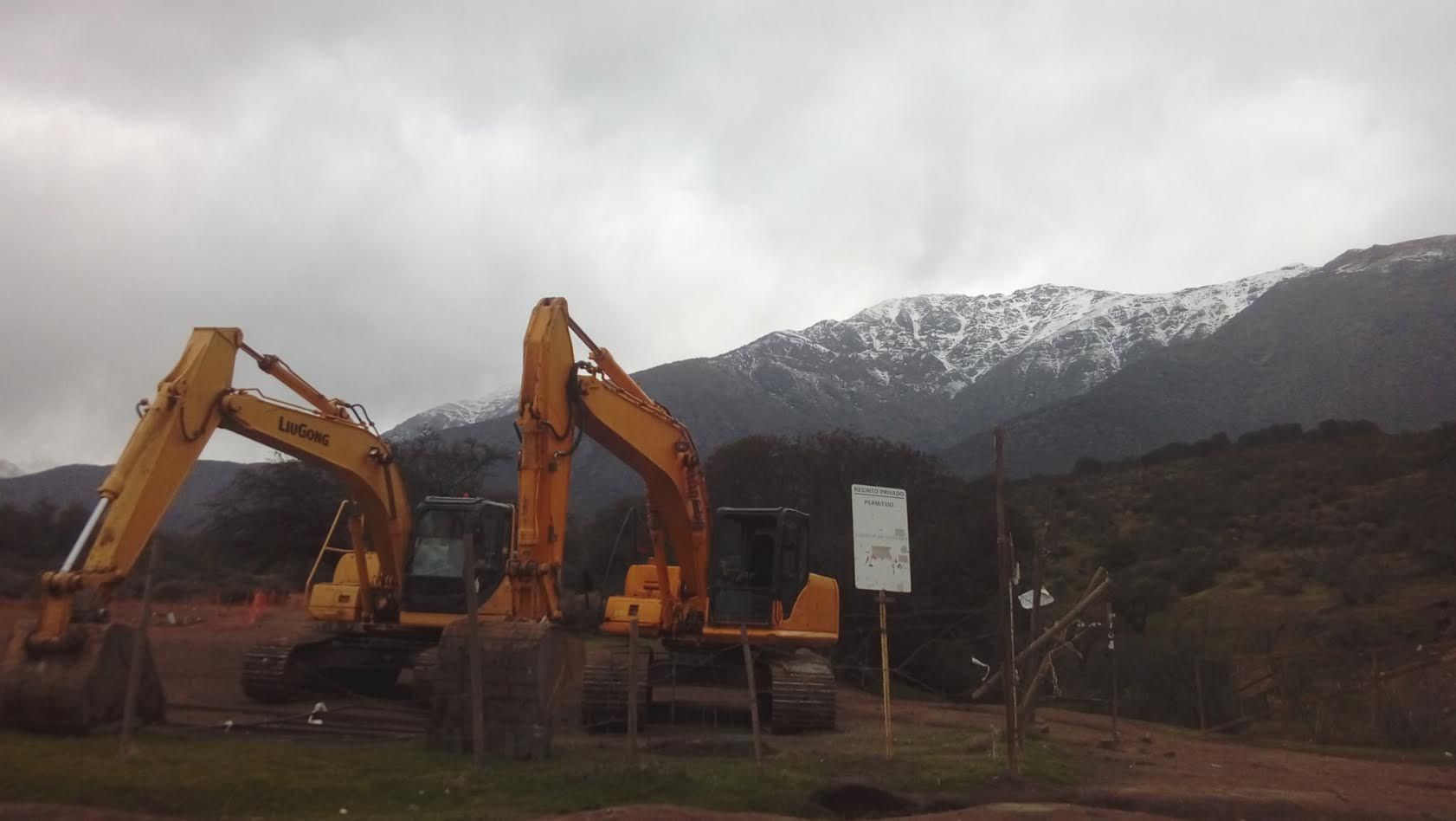
In 2008, Gesterra submitted a real estate project to build 1,300 homes; thanks to the strong organization and mobilization of the newly formed Network for the Defense of the Precordillera, the project was withdrawn and Gesterra submitted a withdrawal request on 27 February 2010. Nevertheless, the project was resubmitted, and the director of the Environmental Assessment Service put an early end to the evaluation in January 2012, as the project lacked or omitted essential information needed for assessment. Along the same lines, the Network has carried out intensive territorial work, including dialogue with the Intendancy and the Executive (Claudio Orrego and Michelle Bachelet), who acknowledged the validity of its protection and committed to acting on it. However, in terms of concrete actions, nothing has happened.
The Real Estate–State Marriage
Syngenta, Enaco, and Sinergia are the names of the business investment conglomerates behind the real estate projects in Bosque Panul. While throughout the entire Concertación — and later Nueva Mayoría — presidential period there was no intention whatsoever to protect the forest, apart from the Network's organizational efforts, it was during Sebastián Piñera's government that the ecological onslaught demanded by the current economic model became most visible.
On 16 December 2013, during the soon-to-be president's first term, the annual PM10 particulate matter standard was secretly revoked without public consultation — meaning more industries would be allowed to set up in zones already saturated with pollution like Santiago, relaxing environmental requirements. The Network, working together with the Environmental Law Clinic of the Universidad Diego Portales — which sponsored them — managed to reverse that standard under Michelle Bachelet's government. However, during that period many real estate projects were approved without undergoing environmental assessment. Similarly, it is expected that this will be modified again under the new Sebastián Piñera government, as generating an "investment shock to bring the country to development" has been a key plank of his campaign.
One reason to expect this is that during his previous government, on 2 August 2010, the Intergovernmental Investment Project Acceleration Committee (CAI) was created when Pablo Longueira was Minister of Economy. The purpose of this committee was to unblock flagship projects through advisory support for their swift implementation. At the time it was strongly criticized by the Comptroller General, as its intervention went beyond its advisory function and "accelerated" processes by bypassing institutional channels. Today, the current president-elect will reconstitute this committee through the "Investment Project Management Office."
The Network and territorial work
Facing all the threats from real estate firms, the Network has remained active both in territorial work and in drafting proposals. Protection projects have been submitted to the Executive in which the authorities only need to declare protection and the users themselves will take charge of maintenance tasks. A volunteer brigade has also been formed, which has extinguished numerous fires (some deliberately set) that have afflicted the forest. Both the brigade and the Network itself have faced intimidation and threats of various kinds, including the theft of all the forest's signs and signage.
Following these events, it was decided to build a platform with a shared objective: "The creation of a Public Park in the Panul," to which many organizations have rallied.
In January of the current year a letter was sent to President Michelle Bachelet and Mayor Rodolfo Carter urging the creation of this Park, signed by more than 80 organizations including academics, scientists, institutions, and neighborhood associations, among others. The Intendancy also received the corresponding notification. There has been no response from either party. Bachelet's government ends without having protected Bosque Panul, leaving uncertain expectations about what might happen to it in the future.
The content expressed in this article is the responsibility of its original authors and does not necessarily represent the views associated with the Panul Para Todos project.
The information archived in Archivo Panul was collected using automated tools, so there may be inconsistencies between what is presented here and the original link. You can visit the original link at the top of this article.