Piñera government proposes removing Bosque Panul from environmental review
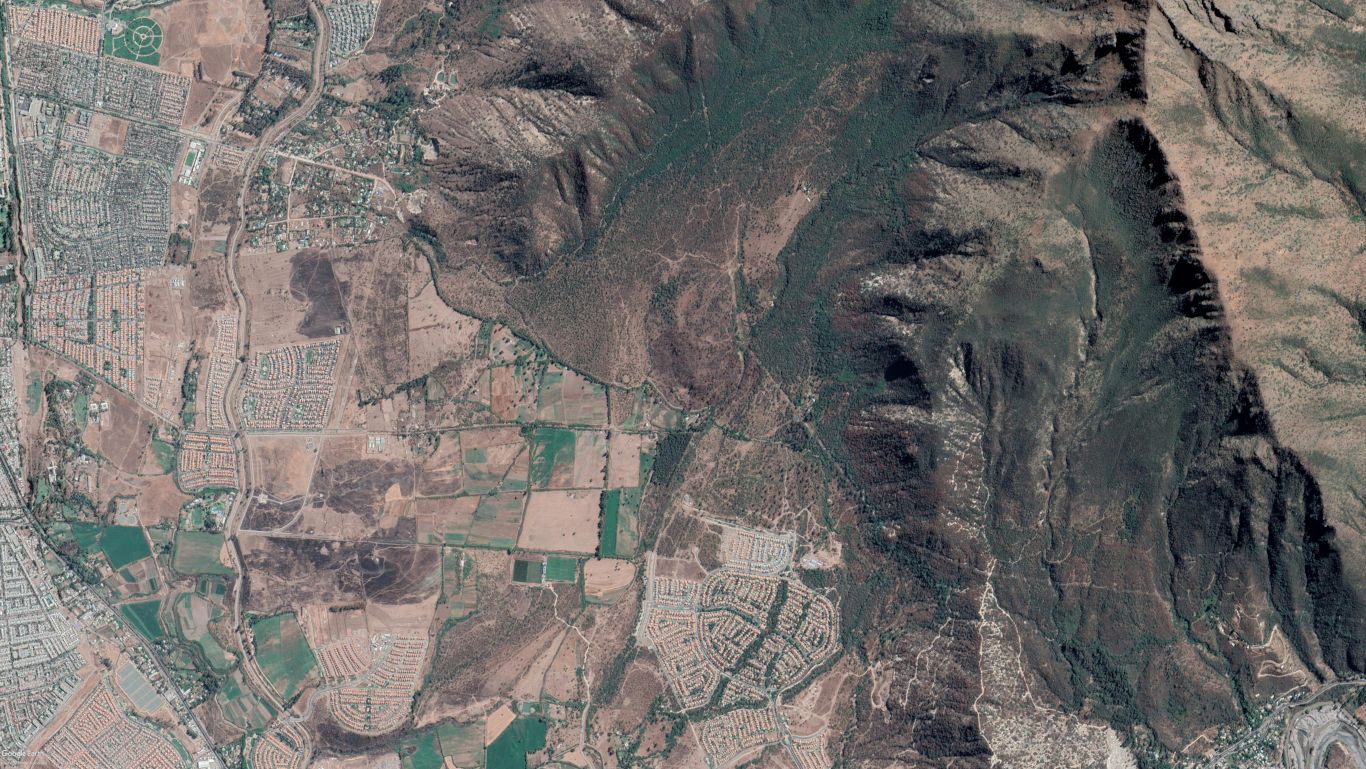
-The government presented a reform to the Environmental Impact Assessment System (SEIA), which will deepen the trend of excluding polluting projects from environmental review, under the slogan of "accelerating investment."
-The reform would further weaken the SEIA, a system that has been unable to stop the enormous environmental damage to the country's ecosystems.
-Proof of this is that the government proposes that real estate projects be excluded from environmental review when they are submitted in zones declared latent or saturated with contamination — something completely illogical.
-Real estate projects like the one that was planned for Bosque Panul and was rejected by the SEIA at the time (2012) would, under the government's proposal, be removed from the system — clearing the path for their approval.
The Environmental Impact Assessment System (SEIA) was born in the United States in 1969. It came to "standardize" environmental law, to increase investment and reduce litigation. Countries began adopting it because the World Bank incorporated environmental assessment as a requirement for financial assistance for investment projects.
Thus, the Stockholm Declaration (1972), in its principle number 11, stated that "the environmental policies of all States should enhance and not adversely affect the present or future development potential of developing countries." Principles that would generate economic but sustainable growth.
True to its commitments, in 1994 the government of Patricio Aylwin enacted the environmental framework law (Law 19300), which was supposedly going to put an end to the impunity with which polluting companies operated. Before this law, the courts of justice were the ones reviewing these cases, which ended up excessively judicialized the issue of environmental damage.
This is why the former Concertación set out to bring order to the matter, regulating pollution while allowing for "economic growth" that would be "socially and environmentally acceptable." At least, that was the discourse.
Because what actually happened is that the pace of investment and growth increased, but at the cost of environmental destruction. A catalogue of polluting projects was created, which were required to enter the SEIA and request environmental permits. All projects not listed in this catalogue were excluded from the SEIA, creating a vast blanket of impunity for these companies.
One of the sectors most benefited by the fine print of Law 19300 was real estate, since projects of fewer than 300 homes did not need environmental permits, even if they were highly polluting.
The various governments that followed Aylwin continued the trend of keeping polluting projects outside the SEIA, which deepened the country's serious environmental deterioration.
Today the SEIA is an office that unifies environmental permits and provides legal certainty to increase investment, rather than a procedure to prevent environmental damage. Since the SEIA was created, 99% of projects submitted have been approved, and for this reason it looks more like an agency of the pro-investment Ministry of Economy than a guarantor of environmental protection. Furthermore, one of the three pillars of the system was supposed to be "public participation," but this ended up being mere rhetoric and is not decisive for project approval. Indigenous peoples have even been left out, violating the "indigenous consultation" enshrined in ILO Article 169.
Piñera again
From the other extreme, the most persistent criticism from big business of the SEIA is "its excessive processing time." The Piñera government took note of this and submitted a SEIA reform that seeks to expedite the processing of projects. To do so, it will remove polluting companies from the SEIA catalogue, streamline, facilitate, and reduce environmental permits, and maintain the cosmetic character of "public participation" (non-binding).
According to the Chamber of Deputies website (where the project was approved on July 4 by the environment committee and carries urgent status): "these modifications allow for reducing project processing times by at least one year, which is what the review of Regional Commission decisions takes."
In addition, the SEIA reform proposed by Piñera enshrines a procedure for "bypassing" the system (article 25 quinquies, Law 19300) and restricts the powers of the SEIA director to halt polluting projects (like the one stopped at Fundo El Panul in 2012).
That is to say, Piñera is seeking to do the same thing he tried in his first government, but which was timely reversed thanks to a legal action filed by the Red Precordillera and other organizations.
The current government bill proposes excluding from environmental review real estate projects submitted in zones declared latent or saturated with contamination (such as Santiago and Chile's major cities) that have a Decontamination Plan (nearly all of them). It is absurd to acknowledge that there are contaminated areas and then use this as an argument in favor of polluting projects.
Massive real estate projects like the one submitted for Bosque Panul — which was stopped within the SEIA — will be removed from the system and will be able to apply for permits directly from the Municipality. And we know there are mayors who approve projects in their municipalities regardless of the quality of life of the territory's inhabitants whom they promised to protect. (Just as background, the current mayor of La Florida, Rodolfo Carter, was the one who approved the preliminary real estate project in Panul back in 2011 — an act that backfired but was ultimately reversed by the community.)
Current situation
Chile currently faces an environmental crisis recognized even by CEPAL and the OECD, due to excessive dependence on extraction of its natural resources, high contamination of its soils, waters, seas, and glaciers, a severe drought affecting towns and vast areas of the country, the growing loss of habitats and species, the dramatic decline of its native forest, and the State's limited role in environmental protection (it allocates only 0.1% of its GDP), despite being one of the countries most affected and to be most affected by "climate change." In a survey conducted by the company Cadem, 74% of respondents agreed with protecting the environment even if it means slowing economic development.
We must stop this now. Every day that passes deepens this situation. If President Piñera wants to do something — and not just talk for the COP25 — let him start by strengthening the SEIA and making changes that go in the right direction, which is protecting the environment, allowing for direct participation by those affected. We must all discuss the current economic growth model — highly polluting and extractivist, completely unsustainable over time — and propose a new model that is in harmony with the planet.
Red por la Defensa de la Precordillera, October 2019.
The content expressed in this article is the responsibility of its original authors and does not necessarily represent the views associated with the Panul Para Todos project.
The information archived in Archivo Panul was collected using automated tools, so there may be inconsistencies between what is presented here and the original link. You can visit the original link at the top of this article.