Environmental Court rules in favor of Bosque Panul
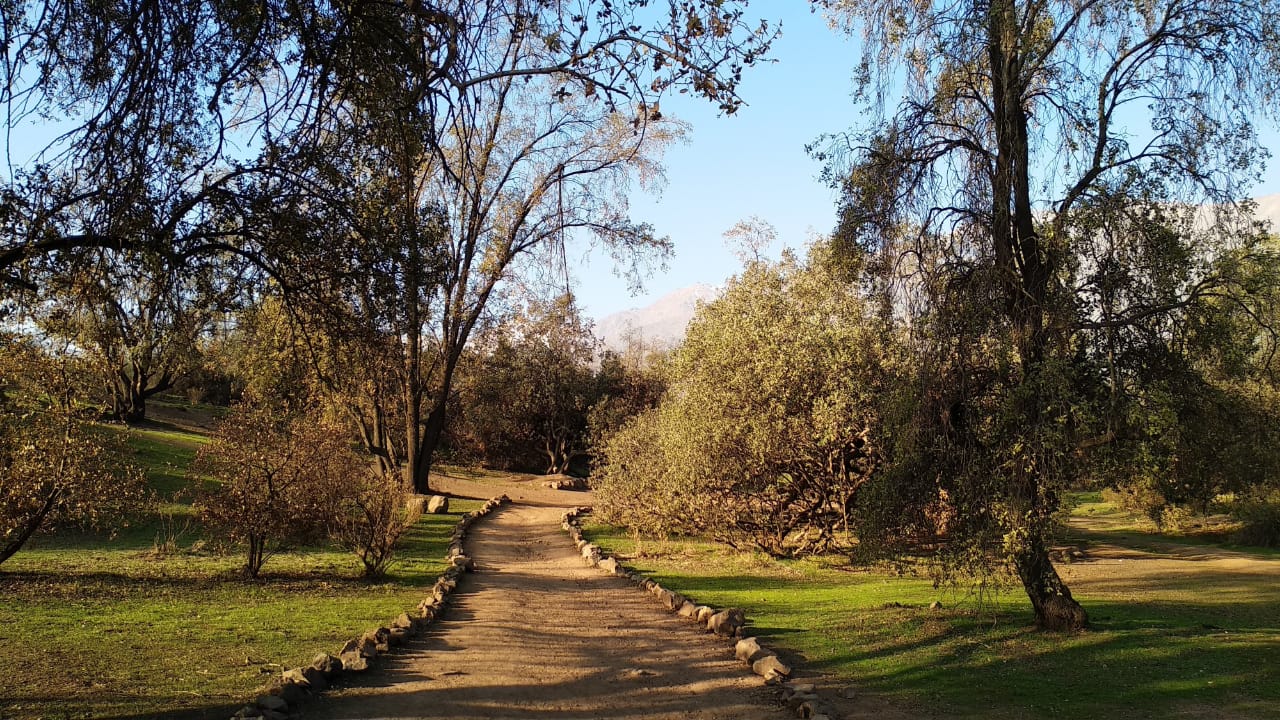
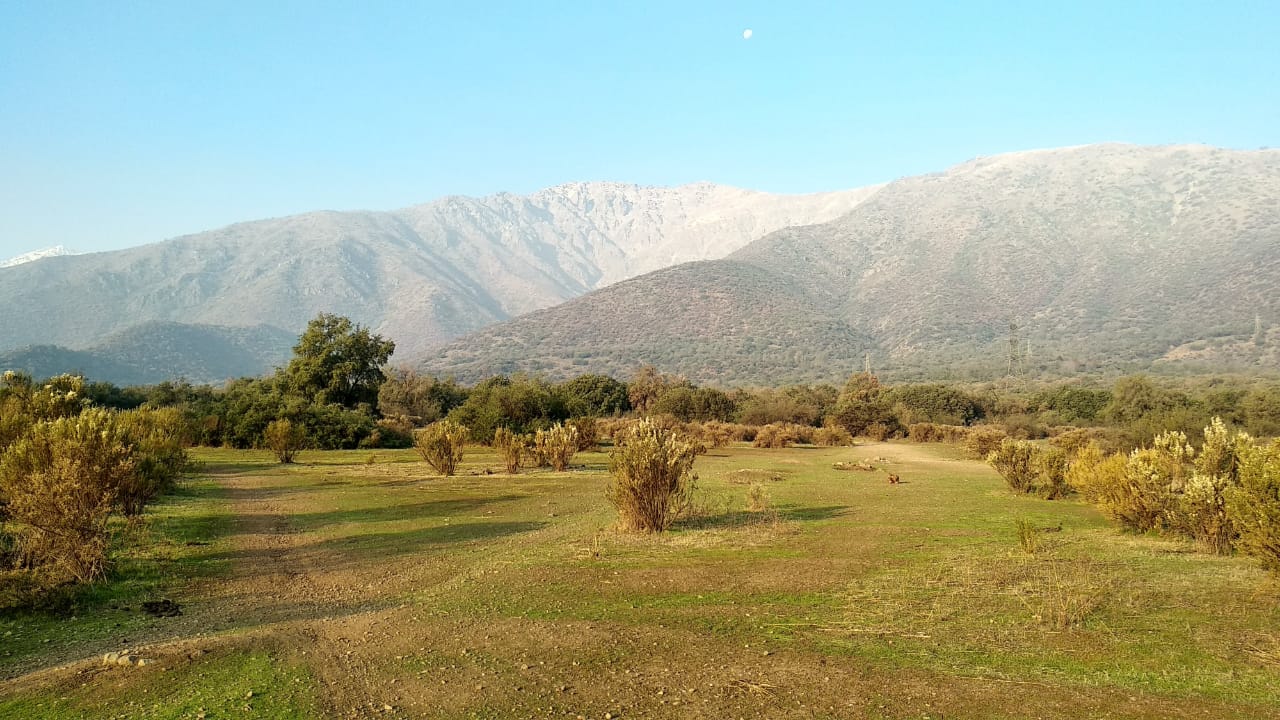
-The Second Environmental Court finally accepted the complaints filed by the community, in which the contamination of Fundo Panul by its owners (Gelymar, a subsidiary of Oxiquim) was denounced, and ordered the Superintendency of the Environment (SMA) to initiate a process for the company to enter environmental review and repair the enormous damage caused by its industry.
-Let us recall that some months ago, the court ordered as a precautionary measure the removal of the tonnes of sand and waste spread throughout the forest — something the company has yet to execute.
-The ruling sets two important precedents. First, it orders the SMA to expand its environmental oversight work beyond simply responding to private complaints; second, while it acknowledges that Bosque Panul lacks official protection, its high ecosystem value warrants more decisive protection from the State and its courts.
Let us recall that in 2016 the dumping of tonnes of sand in Bosque Panul in the municipality of La Florida was reported, and during 2017 this situation was reported to the competent authorities. This led, some months ago, to the Second Environmental Court of Santiago ordering, as a precautionary measure, the removal of those tonnes of sand and waste dumped by the company Gelymar (Oxiquim) in the forest.
The complaints filed by the Red por la Defensa de la Precordillera and the Environmental Law and Justice Clinic of Universidad Diego Portales were initially rejected by the Superintendency of the Environment (SMA, the entity responsible for receiving and resolving such situations in the first instance), because, according to the SMA, Bosque Panul was not officially protected, meaning the company was not circumventing the Environmental Impact Assessment Service (SEIA).
This led the community to appeal the situation to the environmental courts. The judges reviewed the complaints and, through a personal on-site inspection (something the SMA did not do and was criticized by the judges for), concluded that the industry had indeed been contaminating the forest for decades, and that the responsible company would have to take charge of this and enter the SEIA.
Yesterday, through a forceful ruling, the environmental court sided with the community and ordered the SMA to open a process to determine whether the company Gelymar contaminated the forest or any similar location — requiring it to enter the SEIA. And the ruling went further: in the court's judgment, the company was indeed contaminating Panul, and was therefore circumventing the system.
A new victory for those of us who defend Bosque Panul.
The court also established two valuable precedents: that the SMA's role was to investigate all possible grounds for circumventing the system — not just those raised in complaints, as restricting itself in this way would be contrary to the powers granted to it by law; and second, that while the forest was officially unprotected, it was also true that it had been contaminated with impunity — something the SMA itself could have inspected, but since it did not, it forced the court to do so personally, with the SMA thereby failing to protect the legally protected interest, which in this case is the environment.
The court noted that the SMA had interpreted its functions restrictively — in plain terms, it didn't do its job — and thus considered it "wholly defeated" in the case, even ordering it to pay all the costs of the entire proceeding.
Furthermore, the court certified the ecosystem value that forests like Panul hold for all of Santiago and central Chile, and, although they have not been protected by the relevant authorities (Intendant Rubilar, Mayor Carter), the State and the courts must also ensure that they are not contaminated — something enshrined in the constitution itself, but which recent governments have completely forgotten (let us recall that the first rejection of the complaints occurred under the Bachelet government; the current Piñera government maintained the same stance).
We believe that a shift in global consciousness is taking place, and it is becoming increasingly possible, through community organization and perseverance, to protect all the beauty that still lives on this planet.
We value the court's decision and will remain alert to the measures the company takes to repair its environmental damage. For its part, the SMA, in defense of the company, may appeal this ruling.
Red por la Defensa de la Precordillera.
Link to ruling: http://2ta.lexsoft.cl/2ta/download/401837?inlineifpossible=true
Excerpts from the Second Environmental Court ruling:
-"That, likewise, it is necessary to bear in mind that the terms of a complaint do not delimit the powers of the SMA. In other words, the investigation, oversight, and actions that arise through a complaint take on a life of their own, and the SMA must fully exercise its powers and authority. In other words, the complaints filed must be assumed and considered by the SMA with rigor, understanding that behind them there may be an infringement that falls within its sphere of action, for which it must deploy its powers in full and not restricted to what the complaint may explicitly state or omit. The fact that the legally protected interest is the environment demands that broad approach."
-"the SMA appears to have merely conducted a desk review of the background information brought to its attention, limiting itself to verifying whether or not the grounds for SEIA entry indicated by the complainants were present" "That the foregoing implies a self-limitation without legal basis..." "The law requires the SMA not only to determine the denounced grounds... but also any other grounds mentioned in article 10 of Law 19300"
-"That the estimation of stockpiles... fully satisfies the requirements of letter o.8 of article 3 of the RSEIA... which makes the denounced circumvention plausible and, consequently, makes it enforceable that the project disposing of such volume of waste enter the SEIA."
-"That, finally, as a final consideration, it should be noted that beyond whether or not Bosque El Panul constitutes an area placed under official protection, the fact is that the central zone of Chile — one of the five Mediterranean areas of the world — has only about 3% of its surface under official protection, well below current international standards. This creates a fundamental problem in cases before this Court — which has the relevant jurisdiction for these purposes — as there are areas with environmental value, such as the forest in question, that still have no recognition or protection of any kind."
"It is resolved: To uphold the complaint filed against Exempt Resolution No. 196, issued by the SMA, as it lacks proper justification, rendering it null and void, and ordering the respondent to process the complaints filed, and to order the SMA to pay all costs as it has been wholly defeated."
The content expressed in this article is the responsibility of its original authors and does not necessarily represent the views associated with the Panul Para Todos project.
The information archived in Archivo Panul was collected using automated tools, so there may be inconsistencies between what is presented here and the original link. You can visit the original link at the top of this article.