Santiago under water. Is nobody responsible?
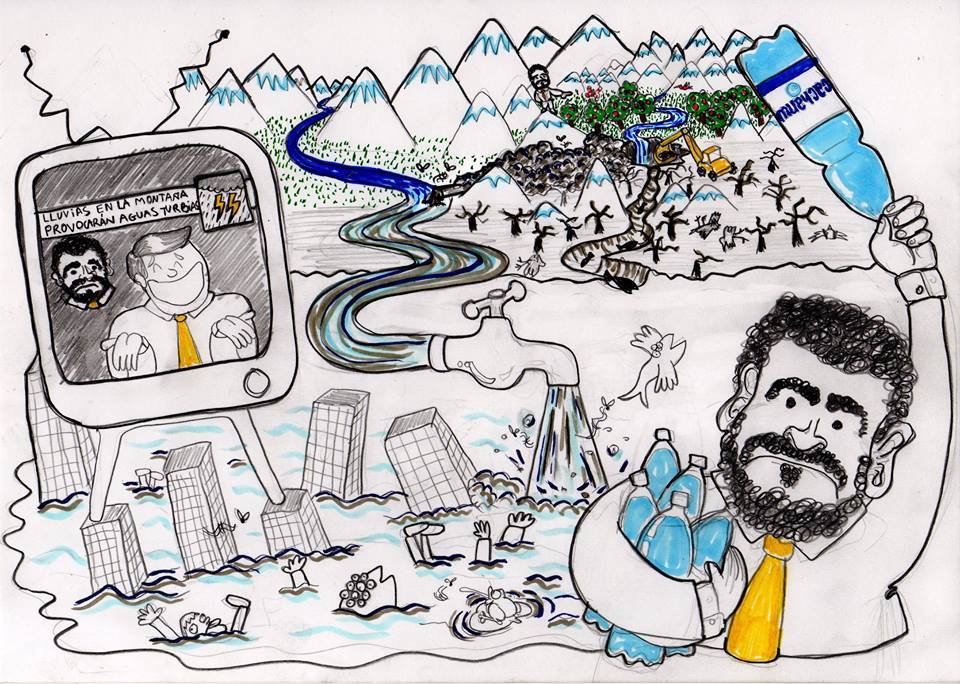
Floods, landslides, deaths, missing people. It seems like a familiar postcard every time it rains in Santiago. As if our city had forgotten that it sits at the foot of the great Andean mountain range, and that the "rain factor" had not been considered in its construction. It seems as though we are mute victims of merciless nature. Is this true?
Floods, landslides, deaths, missing people. It seems like a familiar postcard every time it rains in Santiago. As if our city had forgotten that it sits at the foot of the great Andean mountain range, and that the "rain factor" had not been considered in its construction. It seems as though we are mute victims of merciless nature. Is this true?
The Mapocho overflows.
Look at Costanera Norte. They didn't know the flow could rise so high — despite several historical records showing much higher flows. The Mapocho River overflowed, flooding hundreds of residents and shopkeepers. Intendant Orrego blames Costanera Norte; Costanera Norte blames Intendant Orrego.
They cut off our water.
The company Aguas Andinas cut off the supply for two days, citing excessive water turbidity and a large increase in flow. They also said no machines operate at those turbidity levels. This is completely false. The purification machines they have are not the best, and they prefer to shut them down rather than spend money cleaning and maintaining them. This practice has already become routine. Furthermore, the Luksic family's company Aes Gener (Alto Maipo) has been reported on multiple occasions for carrying out blasting in the high mountains and dumping large quantities of toxic material into the Maipo River — which all Santiago residents then drink.
But Aguas Andinas would not report its partner Aes Gener for polluting the water, since it has a contract to grant it 40% of its water rights, ensuring the operation of the hydroelectric plant — energy that goes to large-scale private mining.
Landslide risk in La Florida.
In La Florida, the Quebrada de Lo Cañas overflowed, causing mudslides that flooded several families. The basins supposedly built to stop a landslide in the Quebrada de Macul were full of water. Fear of a new landslide spread among residents — and as always, the entire municipality was flooded.

How to prevent this.
In Santiago's precordillera, it rains twice as much as in the center. All this water was formerly retained by its forests and native vegetation, and channeled through ravines and underground aquifers throughout the basin, preventing flooding. Today, the urbanization of this territory and its ravines has caused all this water to rush downhill toward the center-west of the capital, flooding everything in its path. Soil loses up to 90% of its water absorption capacity when covered by houses and concrete.
Therefore, Santiago's precordillera must be conserved naturally, by halting its urbanization and reforesting the most heavily intervened areas.
With city planning that regulates and organizes itself in the service of its inhabitants — rather than money — we could avoid these sad episodes and have a better quality of life: a good life.
But who plans the city?
It is the government and the municipality that do so. The government does it at a larger or metropolitan level, and the municipality orders this at the local level. Both have considerable latitude to plan the city — they can decide, for example, where homes, shopping centers, or parks will be built. In the last two decades, the authorities responsible for planning the city have brought thousands of families to live in the precordillera, driven by intense real estate industry lobbying under the pretext of building "social housing." It is not the "middle-class" residents, nor those who urgently need housing (such as those sharing homes), let alone the people living in any of the 82 informal settlements in Santiago, who end up living there — but wealthy families who can afford homes costing more than 150 million pesos.
Certainly, if we as residents are not the ones deciding how the city is planned, the rain of corruption will not stop and Santiago will keep waking up underwater.
Red por la Defensa de la Precordillera.
The content expressed in this article is the responsibility of its original authors and does not necessarily represent the views associated with the Panul Para Todos project.
The information archived in Archivo Panul was collected using automated tools, so there may be inconsistencies between what is presented here and the original link. You can visit the original link at the top of this article.