Geographic study of Bosque Panul recommends adopting a zero-construction policy
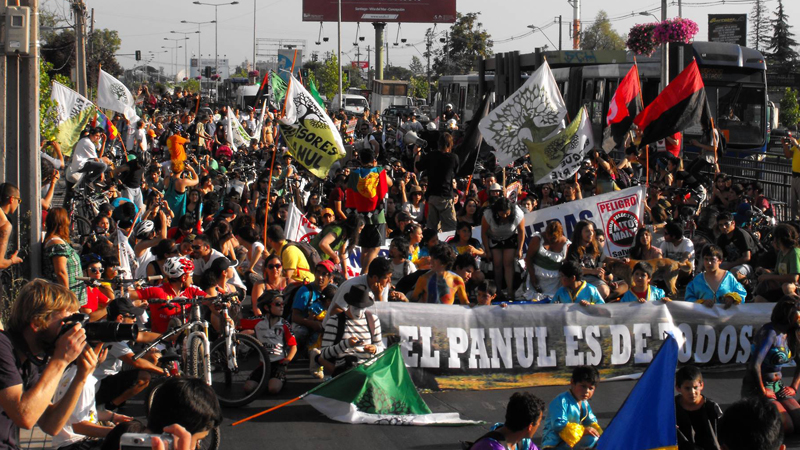
Final results will be released by La Florida's municipality at the end of February. Residents hope the mayor will change his current proposal, which allows subdivision, construction, and commercial use of Santiago's last urban forest.
Final results will be released by La Florida's municipality at the end of February. Residents hope the mayor will change his current proposal, which allows subdivision, construction, and commercial use of Santiago's last urban forest.
One of La Florida residents' longest-standing demands has been to amend the Municipal Zoning Plan to protect the environmental value of the precordillera. With the aim of countering the enormous influence that real estate companies exert over local authorities, residents have been demanding since 2011 that a study be conducted in the area — one that must establish with scientific precision the environmental value of Bosque Panul and the geographic risks associated with urban expansion into this territory.
As scheduled, the municipality must release these final results by the end of February. We demand that once these results are published, a new period of 15 business days be established so that citizens can submit their objections to the mayor's current proposal, which insists on permitting construction in the area.
Once citizen observations have been responded to, the Municipal Council must weigh in — where the mayor has an obedient majority — so all attention will be focused entirely on the final proposal the mayor must present in March.
But what guarantee is there that a zero-construction policy will be adopted for Bosque Panul? Let us examine some background that anticipates an inevitable change of strategy on the part of the municipality:
When in 2011 Rodolfo Carter approved the real estate preliminary project aimed at destroying Panul — just three days after the council appointed him as the new mayor — deep distrust was generated among residents. He has tried to counter that distrust through high-profile messages to the public to convince them that, despite appearances, his intentions are to protect the forest and nothing else.
We want to make it clear that it is Mayor Rodolfo Carter himself who has created very high expectations about "the definitive protection of Panul through institutional channels." While it is true that the mayor has not attended any of the public hearings to address residents' concerns, he communicated with certain councilmembers to convey "that the risk study is in its final stage and is unequivocal about the need to adopt a zero-construction policy in the Bosque Panul area," as Councilmember Reinaldo Rosales reported to those present. Is this a real change in the mayor's vision, or is it another media maneuver?
At last, the moment has come to take a concrete action that could dispel many doubts about the municipality's true intentions. It can present in March to the Municipal Council a final proposal that adopts a zero-construction policy, or it can insist on a new skirmish to allow profit from this territory under a business model different from housing construction but equally destructive.
For example, it could prohibit the development of residential complexes and then say "I have banned housing in Panul" — while in the same act allowing the construction of sports courts, gyms, swimming pools, shops, and restaurants, with their respective streets, parking, electrical wiring, sewage systems, and everything a private country club or exclusive spa would require. And of course, all very "green" and "sustainable" — to shatter the dream of a Community Park for Santiago.
Residents organized in Red por la Defensa de la Precordillera warn that the only guarantee of realizing this dream is to begin it in fact and by our own efforts — right now and by the very inhabitants of this territory — since municipal and governmental institutions in our country are very weak in protecting environmental heritage, are captured by multiple conflicts of interest, impede genuine citizen participation, and concentrate power to the maximum. However, while our institutions have not yet changed, it is vital for the success of our project that we continue watching the authorities to ensure they fulfill the commitments they made to citizens. If we do not apply pressure, the real estate companies will.
NOT ONE LESS NATIVE FOREST. NO MORE PROFIT FROM OUR LIVES.
Also see our Invitation to the Forest Assembly
The content expressed in this article is the responsibility of its original authors and does not necessarily represent the views associated with the Panul Para Todos project.
The information archived in Archivo Panul was collected using automated tools, so there may be inconsistencies between what is presented here and the original link. You can visit the original link at the top of this article.