Getting to know our territory: What is a landslide?
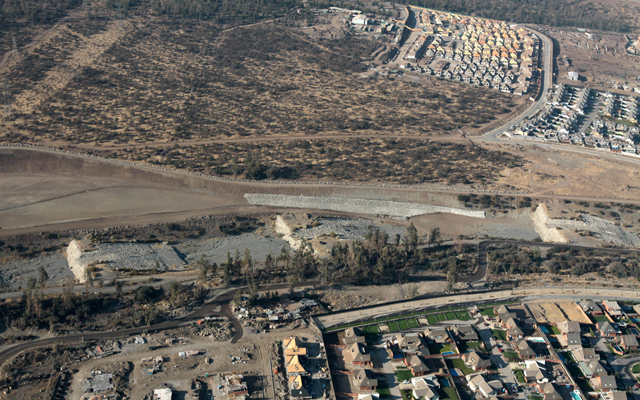
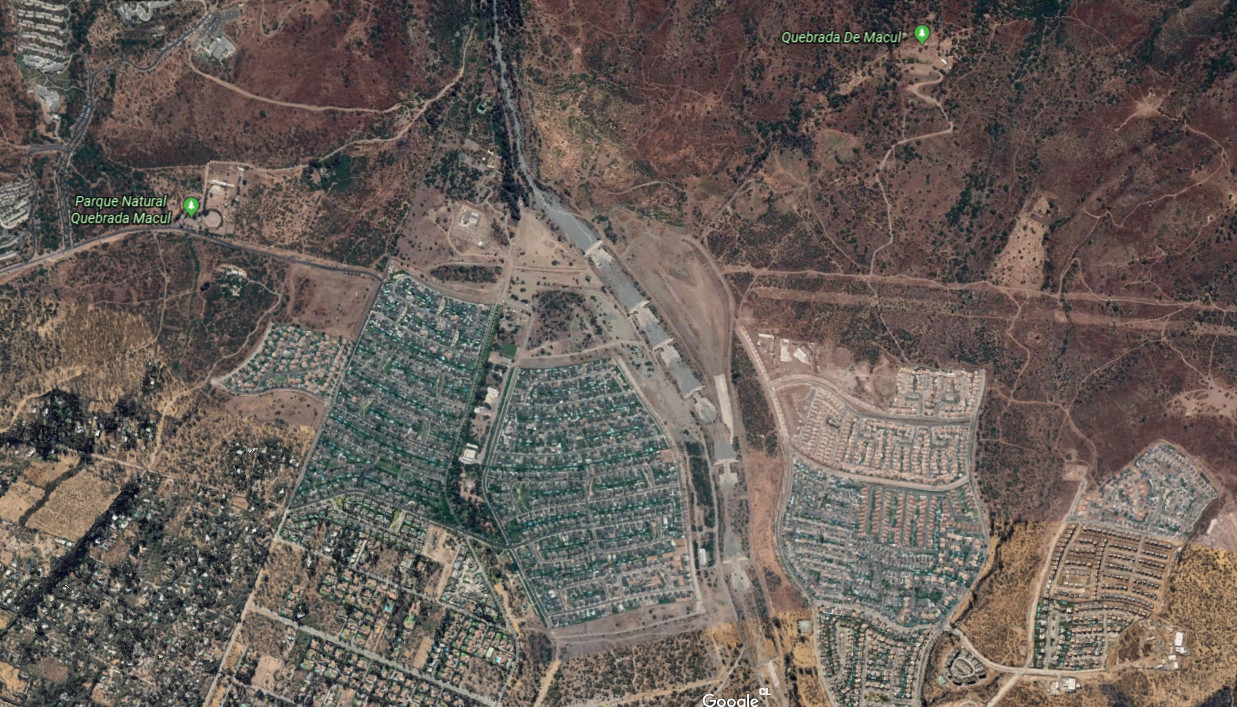
Today, May 3, we commemorate a new anniversary of the landslide in the Quebrada de Macul.
Our territory, as we have experienced it, is highly dynamic — which is why we are relearning to coexist with earthquakes, landslides, rising extreme temperatures, and so on. Without a doubt, we are in a period where these processes are becoming increasingly frequent. Some call it climate change or a critical period, which is nothing more than the acceleration of these processes due to the economic and social context we are perpetuating.
For this reason, re-knowing the territory we inhabit is vital, and in this sense, our territory shakes and reminds us that it is alive. One event shook us on May 3, 1993, when the landslide of the Quebrada de Macul occurred, causing 23 fatalities, 9 disappearances, 30,000 victims, and 1,169 homes affected. It is also worth noting that, according to certain studies, that event was only one-third of the maximum possible flow from that ravine. On the other hand, in the current context of reckless urban expansion — including construction in areas that pose risks to our lives and homes — we forget that we live in a living territory.
With this introduction, we emphasize the importance of knowing and understanding what a landslide is and how it occurs.
What is a landslide, and how does it occur?
A landslide can be understood as a natural process in which loose material accumulated in the high mountains or on hillsides is swept downward and deposited in areas with less incline, such as the valley. It can also be understood as a type of flow (a mixture of water and rocky material) that uses ravines and riverbeds to travel. This flow can move at great speed and grow in size along its path.
Landslides occur under certain combined climatic and geographic conditions, which can mainly be summarized as a combination of: high temperatures in the high mountains, causing heavy and sustained rainfall in places where snow normally falls, or rapid snowmelt. In addition, the amount of loose material present in the ravines also plays an important role in generating and amplifying the landslide flow.
Santiago has geographic (mountainous areas) and climatic characteristics that make it prone to these phenomena. An example is the 1993 landslide in the Quebrada de Macul, caused by intense and prolonged rainfall in high mountain areas where snow typically falls. This caused the loose material accumulated at the top of the ravine to be swept away by the water and slide down the slopes into the valley.
Each territory has its own particular form, and knowing it is vital to be able to live in harmony with it. The recent cases of landslides in the north, center, and south of the country are natural and even healthy for an ecosystem — but not knowing where we are living and building brings many risks. If we add to this the forgetting of these processes and the lack of will to plan for collective wellbeing, we are unnecessarily exposing ourselves to new catastrophes.
You may also be interested in: Landslide in the Quebrada de Macul: Natural disaster or planned crime?
The content expressed in this article is the responsibility of its original authors and does not necessarily represent the views associated with the Panul Para Todos project.
The information archived in Archivo Panul was collected using automated tools, so there may be inconsistencies between what is presented here and the original link. You can visit the original link at the top of this article.