The dark connections between politicians and businesspeople that keep Bosque Panul at risk

The following citizen investigation reveals the connections between the government, the opposition, and powerful businesspeople that keep Santiago's last native urban forest in mortal danger.
State-business marriage
This close relationship between the state and the business sector is nothing new. That the son-in-law of General Pinochet financed the entire leadership of both the Concertación and the Alianza was merely the tip of the iceberg, demonstrating that in Chile, those who concentrate wealth make the laws — something deeply troubling in one of the most unequal countries in the world.
"Without growth there is no social development," President Michelle Bachelet said a few days ago, but who benefits in Chile when there is "economic growth"? Can averages make us less poor, especially when some people start with enormous advantages?
The precordillera auctioned to the highest bidder
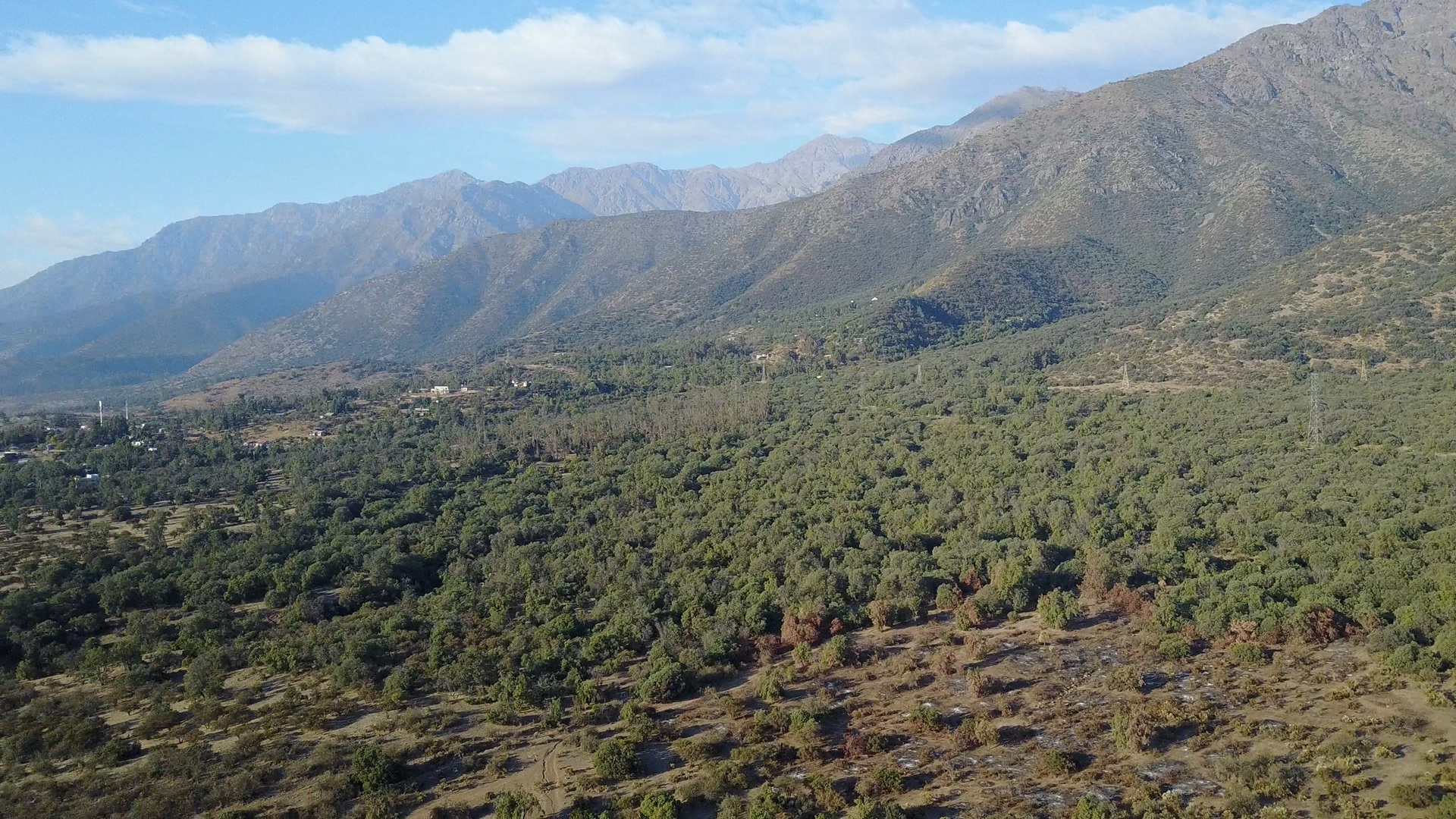
The Santiago precordillera is a vast territory of 40,000 hectares covered with beautiful native forests and ravines. These forests are vital for human existence, and among their many benefits stands out their role in purifying the air and smog, absorbing rainwater, containing landslides, and providing green areas — making it an important place for recreation.
This strategic territory has become the most sought-after location for real estate developers to build, something that every government to date has permitted.
The story goes roughly as follows.
Patricio Aylwin's Concertación — convinced that the city needed to reach 10 million inhabitants by 2020 — created, in 1994, the Santiago Metropolitan Zoning Plan (PRMS). This plan expanded the city, allowing the construction of mega-projects in the heart of the native precordillera. This process in La Florida provoked angry protests against it.
Coincidentally, many of these Andean properties had already been purchased at ridiculously low prices by certain real estate companies, prior to the regulatory changes — something similar to the Caval case, but without witnesses. Other properties had been gifted (privatized) during the dictatorship, such as Fundo Panul in La Florida.
This "insider information" about where the city will grow is worth gold, being one of the most lucrative and murky businesses corroding public administration — especially since the true amount stolen from society will never be known with certainty.
The Macalto Project
One of these "good deals" was the purchase of Fundo Macalto, in La Florida's precordillera, in 1993.
This 250-hectare estate was acquired at very low cost by four influential business groups: the Cueto clan (LAN, LATAM), Grupo Sarquis (Pesquera el Golfo, now Blumar, which benefited from fisheries legislation thanks to lobbying in its favor by former minister Longueira), Alberto Kassis (the "king of processed meats", owner of Preferida, Cecinas Winter, San Jorge, etc., and 16% of COPESA), and the Zalaquett family (Pablo Zalaquett, who served as mayor of La Florida for two terms, is today under investigation for irregular campaign financing).
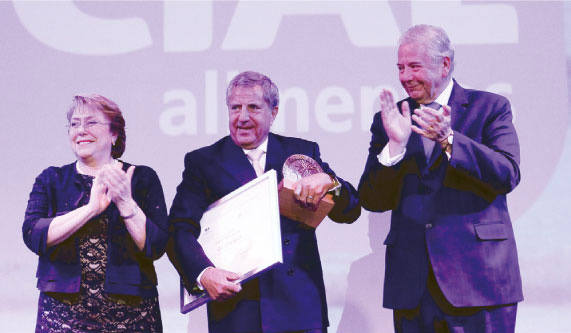
The Sarquis family and Alberto Kassis are close friends of President Michelle Bachelet, occasionally visiting each other at their estates on Lake Caburga. The "king of processed meats" financed Bachelet's campaign and is also a financier and member of the Pinochet Foundation. (In the cover photo, Kassis receives the "company of the year" award in 2014 from Bachelet's hands.)
The president is fully aware of the conflict over Bosque Panul. In 2007, during her first term, she attended a community meeting organized in La Florida, where she committed to taking steps toward its protection. In exchange the residents gave her a boldo plant and then a letter.
The Macalto project quickly obtained its environmental and construction permits, despite being covered by native forest.
But these permits were not without controversy. While the conflict was being taken to the courts locally, something similar was occurring within the government. Several state agencies rejected the project with forceful observations about the importance of the native vegetation and the danger of living there. However, the project was approved by the director of the Metropolitan CONAMA, Clemente Pérez, who also dismissed mitigation measures for possible landslides and flooding requested by the Ministry of Public Works and Sernageomin, among others.
This is so serious that today there are homes built on the path of the 1993 Quebrada de Macul landslide — an event that claimed 23 lives and destroyed 400 homes. This landslide has a recurrence interval of 20 years and could be of greater intensity than the previous one.
Clemency for Clemente?
Clemente Pérez is a lawyer and member of the Christian Democracy party, with a long career in both the public and private sectors.
After working at the World Bank and the Inter-American Development Bank — as an advisor on urban and environmental policy — he joined CONAMA. In parallel he founded the consulting firm Sustentable S.A. He then became Undersecretary of Public Works under Ricardo Lagos and chairman of the Metro under Michelle Bachelet's first government.
As a public official and private advisor, he has not exactly been sustainable.
First, as director of CONAMA he approved Macalto, which led to the logging of half of La Florida's precordillera.
Then, as a private consultant, he worked for the owners of Fundo Panul — carrying out through his company Sustentable S.A. the Environmental Impact Study for the real estate project, at the most critical moment of the struggle for its conservation.
He also carried out an environmental study for Aguas Andinas' plant located in La Florida — suspicious payments that were investigated by CIPER.
Clemente Pérez has very good friends. One of them is the current Intendant of Santiago, Claudio Orrego.
The person in charge of urban planning in Santiago
The Intendant of Santiago has a long list of projects approved in the precordillera. As mayor of Peñalolén, he allowed the controversial construction of Universidad Adolfo Ibáñez above the 1,000-meter contour line and the Metrogas gas plant. He also attempted to modify the Municipal Zoning Plan and extend the urban boundary up the mountain, which was rejected by residents in a referendum.
Three years ago, when he had just assumed the intendancy, he committed to creating "some kind of protection" for Bosque Panul — but this remained only words.
In addition to leaving the precordillera completely unprotected, he has refused to create a Public Park or Reserve in Panul, citing the alleged high cost of the forest. When asked via transparency requests about the supposed appraisal, he refused to provide it.
The situation becomes even darker in light of the citizen investigation that revealed how the owners of Panul inflated its value through shell companies in order to deceive the state.
Coincidentally, the amount demanded by the Navarrete family is the same as that cited by government authorities.
How many residents could fit in Bosque Panul?
Gonzalo Duarte will be remembered as one of the greatest political illusionists in history.
On one hand, he ardently defended the community's demand for precordillera protection, but on the other he created a Zoning Plan that served the interests of real estate developers.
It all starts with the Macalto project (1996). Due to a serious error in his administration, the Supreme Court ordered him to approve the "preliminary project" — that is, only the submission of the project to the municipality. But the mayor publicly stated that the Court had ordered him to approve the entire project, quickly granting Macalto its construction permits even before it had been environmentally assessed.
As pressure from residents became unsustainable, Duarte and the Municipal Council created a Zoning Plan (1997) that drastically reduced the number of homes, dashing real estate aspirations for what remained of the precordillera. This was seen as a small victory for the community. The real estate companies sued the municipality in court but to no avail, as the courts accepted the "environmental protection" argument used by the municipality.
However, at the same time that Duarte and local authorities were publicly defending the environment, they were working on another Zoning Plan — one that would restore and increase all the benefits taken from real estate developers by the previous Plan, with considerably less public pressure this time around.
Thus, on the final day of his term, the new Municipal Zoning Plan (2001) was published, restoring great hopes and density rights to real estate companies and opening the precordillera's doors to the construction of mega-projects such as Lomas de Lo Cañas, Jardines de la Viña, Cumbres de la Viña, Las Tinajas, extension of Macalto, and the possibility of construction at Fundo Panul and Zavala (former Viña Tarapacá).
The right hand of former mayor Duarte, former director of works Mariela Vaccaro, after defending the environment and leaving her post vacant, fell into the arms of real estate: she worked as an independent reviewer of the Macalto project and as a member of the technical team on the Environmental Impact Study for the real estate project at Fundo Panul.
It is unacceptable for directors of works, CONAMA, or other officials who were involved in drawing up a Zoning Plan to subsequently work for companies or private parties that directly benefited from those modifications. But what Gonzalo Duarte did is even more unacceptable, and he should explain himself and publicly apologize for the enormous environmental damage caused in La Florida — especially since today he is a member of the leadership of a governing party (DC).
The connections between the owners of Fundo Panul and the opposition.
Fundo Panul was a gift from Pinochet to the Navarrete Rolando family in 1977. This family, which controls the OXIQUIM holding company, has significant connections in the political world.
At the end of 2011, in the first year of Sebastián Piñera's government, the real estate project "Fundo El Panul" was included in a committee of priority projects at the national level, thanks to the efforts of former minister Pablo Longueira. This committee was investigated for failing to make its procedures transparent in fast-tracking these projects, and ultimately had to be dissolved.
That is not all. Two years later, the Piñera government carried out a legal modification that allowed, among other things, real estate projects such as the one presented in Panul to bypass environmental review — opening the door for the Navarrete family (let us recall that the project had been environmentally rejected one year earlier). Thanks to a lawsuit filed by Red Precordillera and Universidad Diego Portales, this modification was ultimately eliminated.
Communities organize to halt the real estate advance in the precordillera
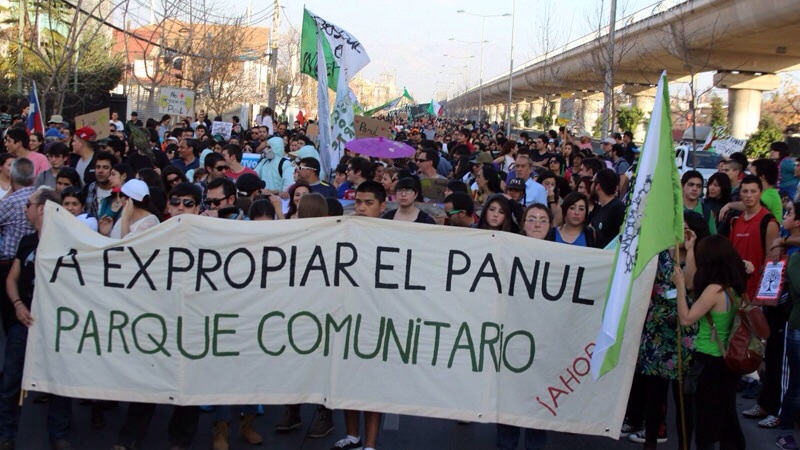
Communities are increasingly aware of the value of nature and places like Panul, and of the importance of conserving and managing them for the benefit of all. As long as this continues, facts of corruption will keep coming to light — demonstrating why our authorities have decided to benefit real estate companies at the expense of the environment.
Meanwhile, communities are moving forward in self-managing their definitive protection.
Red por la Defensa de la Precordillera
The content expressed in this article is the responsibility of its original authors and does not necessarily represent the views associated with the Panul Para Todos project.
The information archived in Archivo Panul was collected using automated tools, so there may be inconsistencies between what is presented here and the original link. You can visit the original link at the top of this article.